
Neck Pain, Whiplash and Neck-Related Headache Therapy at Home
In-Home Neck Pain and Whiplash Therapy in Oakland and Macomb County, Michigan
Turn your head freely again and ease the headaches that start in the neck.
ELEVATE provides in-home physical and occupational therapy for adults with neck pain, whiplash, neck-related headaches, and thoracic outlet syndrome in Oakland and Macomb County, Michigan. Licensed therapists work on motion, strength, posture, and daily tasks in your own home, alongside your physician. Visits are private-pay and one-on-one.
- Neck pain is very common. Any part of the neck, including muscles, joints, discs, tendons, ligaments and nerves, can cause it, and pain can spread into the shoulder, jaw, head or arm.
- Whiplash, a sprain or strain of the soft tissues of the neck, often follows a car accident or fall. Pain from the upper neck can also cause headaches. Thoracic outlet syndrome is a different cause of neck, shoulder and arm symptoms.
- Most neck pain improves with the right care, and rarely needs surgery. Injuries after trauma and certain symptoms need medical evaluation first.
- Physical therapy restores motion, strength and posture, and occupational therapy adjusts workstations and daily habits.
- ELEVATE Therapy Services brings therapy to your home in Oakland and Macomb County, Michigan. Visits are private-pay and one-on-one.
How the neck works and what goes wrong
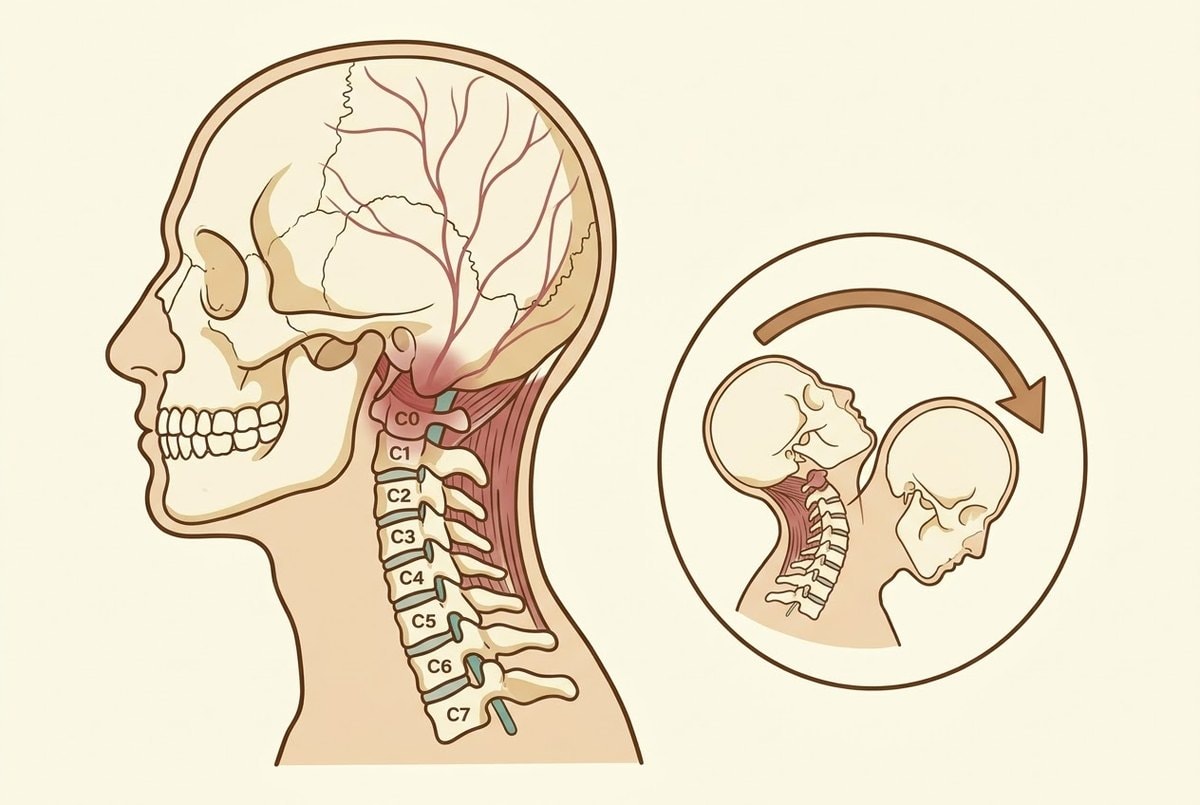
The neck (cervical spine) is made of seven stacked vertebrae, with discs, joints, ligaments and muscles that support the head and let it move in every direction. Nerves leave the spinal cord between the vertebrae and travel into the shoulders, arms and hands. MedlinePlus, from the National Library of Medicine, notes that any part of the neck can cause problems, and that neck pain can also come from the shoulder, jaw, head or upper arms.
Causes and risk factors
- Sustained postures and overuse: long periods at a computer, phone or desk, or repeated overhead work
- Falls and accidents, including car accidents, which are a common cause of whiplash
- Sleeping position and pillows that hold the neck awkwardly
- Degenerative changes in discs and joints with age, and stress and poor sleep that increase muscle tension
- Thoracic outlet syndrome: causes include injury, anatomical differences, tumors that press on nerves, poor posture, pregnancy, and repetitive arm and shoulder movements such as in certain sports
NIAMS notes that back and neck pain often has several contributing factors at once, including fitness level, stress, sleep and work demands. TOS is more common in women and usually starts between ages 20 and 50, according to MedlinePlus.
Symptoms
- Neck pain and stiffness, often worse with certain movements or after sitting
- Tight, sore muscles at the base of the skull and across the shoulders
- Headaches that start at the back of the head or the neck, sometimes on one side
- After whiplash: pain, stiffness, dizziness, tiredness and sometimes pain spreading into the shoulders or arms, which can build over hours or days
- Burning, tingling, numbness or weakness in the arm, hand or fingers, which can come from an irritated nerve in the neck or from TOS
- With TOS affecting a vein: a hand that is sensitive to cold, pale or bluish, or a swollen arm that tires easily
When to get help
- See your physician for neck pain that does not improve after a few weeks, or that comes with numbness, tingling, weakness in the arm or hand, or severe pain that does not improve with medicine.
- Seek urgent care for neck pain with fever, or with unexplained weight loss.
- Report a swollen, pale or bluish arm or hand, or sudden coldness in the arm.
- After a car accident, have neck pain evaluated even if it seems mild, since whiplash symptoms can develop later.
How neck problems affect daily life
| What a person may notice | Why it happens | Who helps |
|---|---|---|
| Stiff, sore neck that limits turning to check traffic or look over your shoulder | Strained or guarded muscles and irritated joints restrict motion. | Physical therapy |
| Headaches that start at the back of the head and follow long hours at a screen | Upper neck joints and muscles stressed by posture can refer pain into the head. | Physical therapy, occupational therapy, with your physician |
| Pain after a car accident or fall that builds over days | Overstretched neck muscles and ligaments in whiplash become inflamed and tight. | Your physician, then physical therapy |
| Arm or hand tingling, numbness or weakness | A nerve is irritated at the neck or squeezed in the thoracic outlet. | Your physician, with physical therapy |
| Trouble working at a desk, driving or sleeping | Sustained positions and pillows load the neck. | Occupational therapy, physical therapy |
| Fear of moving or tension that keeps the neck rigid | Pain and worry lead to muscle guarding, which adds to stiffness. | Physical therapy |
How care works
MedlinePlus notes that neck problems are treated according to the cause, and that treatment may include ice, pain relievers, physical therapy, or a cervical collar, and that surgery is rarely needed. For thoracic outlet syndrome, medicines, physical therapy and relaxation can help, surgery is an option for some people, and most people recover.
The APTA clinical practice guideline on neck pain covers neck pain with mobility deficits, neck pain with headaches, neck pain with radiating pain, and neck pain with movement coordination impairments, and supports education, staying active, individualized exercise and, when appropriate, hands-on therapy. A therapist classifies your pain pattern and builds the plan to match.
What physical and occupational therapy each do
Physical therapy: restoring motion and control
- A thorough assessment of neck, shoulder and upper back motion, strength, posture, nerve symptoms and headache triggers
- Gentle motion first, then strengthening of the deep neck and shoulder-blade muscles
- Hands-on techniques as appropriate, plus movement retraining
- For neck-related headaches: targeted upper neck mobility and strength work, with your physician
- For TOS: posture, breathing, shoulder-blade and chest-wall mobility and nerve gliding
- After whiplash: a graded return to driving, work and sport, and a written home program
Occupational therapy: changing what loads the neck
- Workstation setup: screen height, chair, keyboard and phone use
- Sleep position and pillow recommendations
- Body mechanics for lifting, driving and overhead tasks
- Pacing and micro-break strategies for desk or phone work
- Equipment such as supportive seating or headsets when helpful
Supporting services
What an ELEVATE home visit looks like
- Review: how the pain started, accident history, headaches, medicines and your doctors’ recommendations.
- Assessment: neck, shoulder and upper back motion, strength, posture, nerve symptoms and daily tasks.
- Home setup: bed and pillow, chair and workstation.
- Plan: goals that matter to you and a written home program.
- Communication: progress shared with your physician as appropriate.
ELEVATE serves adults in Oakland and Macomb County, Michigan, with licensed physical and occupational therapists. See Payments & Insurance for details.
Questions families ask
How long does whiplash take to heal?
Can neck problems cause headaches?
Do I need a collar?
What is thoracic outlet syndrome?
Will I need surgery for neck pain?
Do I need a referral or does insurance cover this?
Does ELEVATE replace my doctor?
Trusted resources for neck problems
These organizations are the leading sources of education and support for this condition. We are not affiliated with them.
Related guides
Browse every condition we treat on our Conditions We Treat page.
Sources and medical note
- National Library of Medicine, MedlinePlus: Neck Injuries and Disorders and Thoracic Outlet Syndrome.
- National Institute of Arthritis and Musculoskeletal and Skin Diseases: Back Pain (the spine, including the neck).
- Blanpied PR et al. Neck Pain: Revision 2017. Journal of Orthopaedic & Sports Physical Therapy, 2017 (APTA).
This page is educational and is not medical advice. It does not replace your physician’s care. Always follow your physician’s instructions. After a significant accident with neck pain, numbness or weakness, or for neck pain with a sudden severe headache, chest pain or signs of stroke, call 911 immediately.
Contact Elevate Therapy Services
Need to reach us? Use our web form to send a message now, or contact us using one of the methods below.
We will be in contact within one to two business days.
Phone: (248) 266-5721
Fax: (586) 788-1704
