
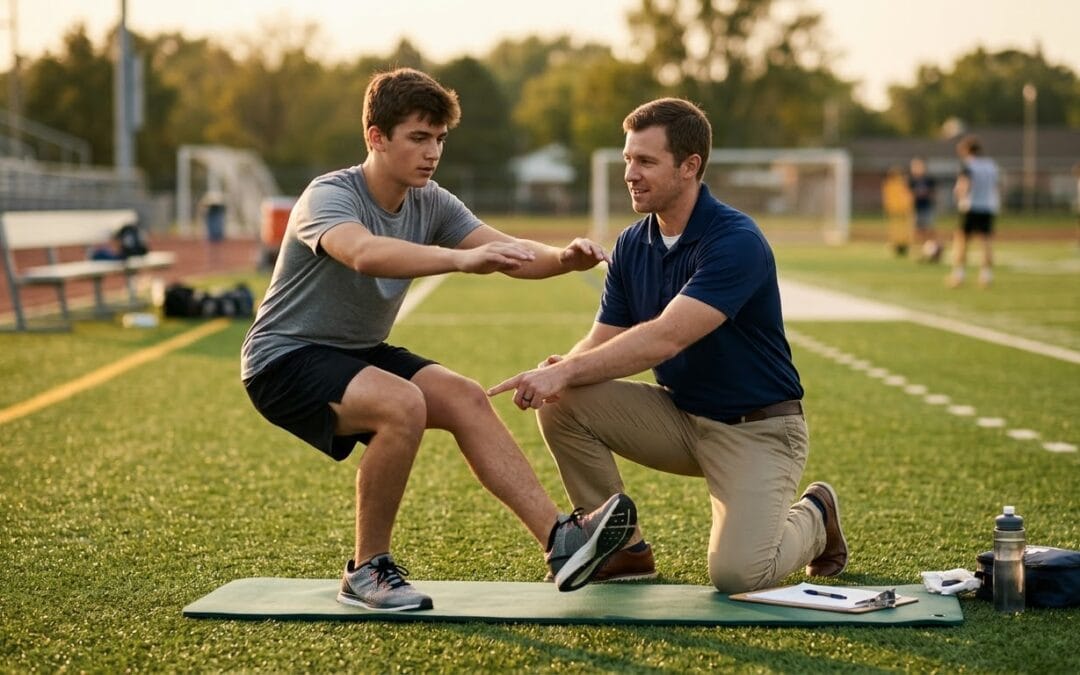
Many people who get hurt are not weak. They are strong, fit, and consistent, and then a routine movement goes wrong: lifting a box, cutting on a field, stepping off a curb awkwardly.
Strength is one input into how well your body handles load. It isn’t the only one.
Where the stress actually goes
Every movement distributes stress through the body. When you pick a box up off the floor, your back, hips, knees, and ankles all share the work. What matters is how that work is split.
When one region takes too much, the tissue there is working harder than it was built to sustain, repetition after repetition. When another takes too little, the load gets pushed elsewhere. A knee that drifts inward during a lift may point to weak hip muscles upstream. Excess motion in the low back may mean the hips aren’t contributing enough.
We look at this in three planes: forward and back (sagittal), side to side (frontal), and rotation (horizontal). Strength training often emphasizes the first and neglects the other two.
Context decides what’s “normal”
There is no single correct joint angle. Bending 45 degrees at the hip is plenty to lift a box off a table. The same 45 degrees to pick that box up off the floor would be inadequate and push work onto the back. Good movement is judged relative to the task.
Training that matches real life
Real life isn’t a clean set of ten reps. It’s uneven ground, awkward objects, fatigue, distraction, and sudden changes in direction.
Programs often leave out qualities like:
- Unpredictability: reacting to movement you didn’t plan, such as a called direction during a shuffle
- Perturbation: recovering when force changes unexpectedly
- Unstable or varied surfaces: where your core and joints must control load without help
- Complexity: several movements in a row, not just one
Each one can also be overdone. Pushing a single quality too hard, such as jumping and impact work with too little recovery, can create the injury you’re trying to avoid. Gaps and excesses both matter.
Signs your body may be sharing the load unevenly
Uneven stress rarely announces itself all at once. It tends to show up as small, nagging patterns that are easy to ignore:
- The same spot gets sore after workouts, yard work or a long shift, even when the activity changes
- One side always feels tighter, weaker or less coordinated than the other
- Your knees drift inward when you squat, jump or come down stairs
- Your low back fatigues before your legs do during lifting or carrying
- Balance feels shaky on one leg, on uneven ground or when you turn quickly
- An old injury still “talks” to you when you push the pace
None of these means an injury is coming. Each one is a clue about where your body may be compensating, and clues are easier to address before they turn into a problem.
What we actually look at
A screen is built around the tasks you do, not a generic checklist. Depending on your sport, job and goals, that can include:
- Lifting from the floor: how your hips, back and knees share the work
- Reaching and placing overhead: shoulder and upper-back control under load
- Squatting and single-leg step-downs: knee alignment, ankle mobility and hip strength
- Changing direction: how you absorb and redirect force when you cut or turn
- Balance and reaction: how quickly you recover when something unexpected happens
We then challenge those movements on purpose, adding speed, load, fatigue or an unplanned cue, because many problems only appear when the movement isn’t perfect.
What we look for
Common movement flaws we screen for
These patterns are common in athletes, lifters and active adults. Spotting one doesn’t mean you’re injured. It shows where to focus before small problems turn into pain.
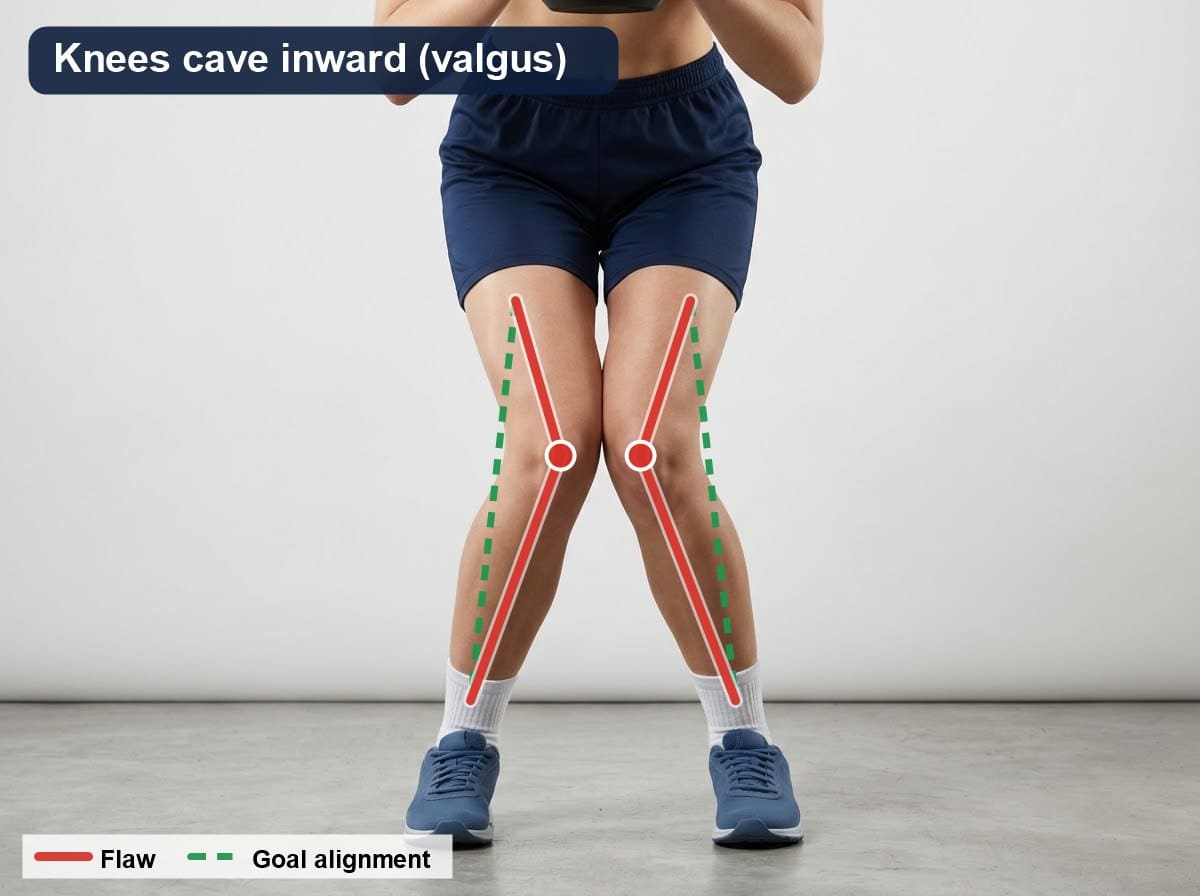
Knee valgus collapse
Knees cave inward
Shows up in: Squats, jump landings, cutting and stairs
Why it matters: Adds stress to the ACL and the kneecap
What we check: Hip strength and control, ankle mobility, landing mechanics
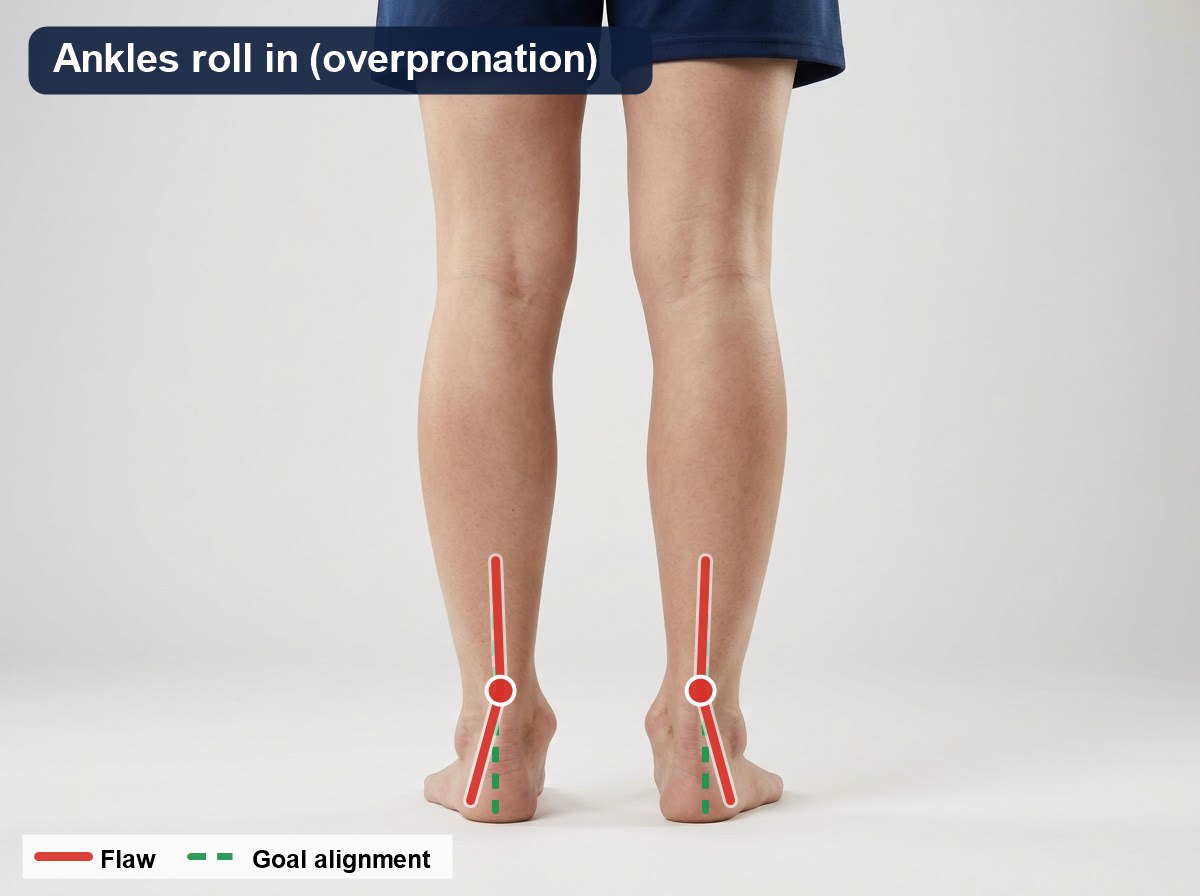
Overpronation
Arches flatten and ankles roll in
Shows up in: Walking, running and single-leg balance
Why it matters: Can feed shin, arch, heel and knee pain
What we check: Foot and calf strength, ankle mobility, balance, footwear
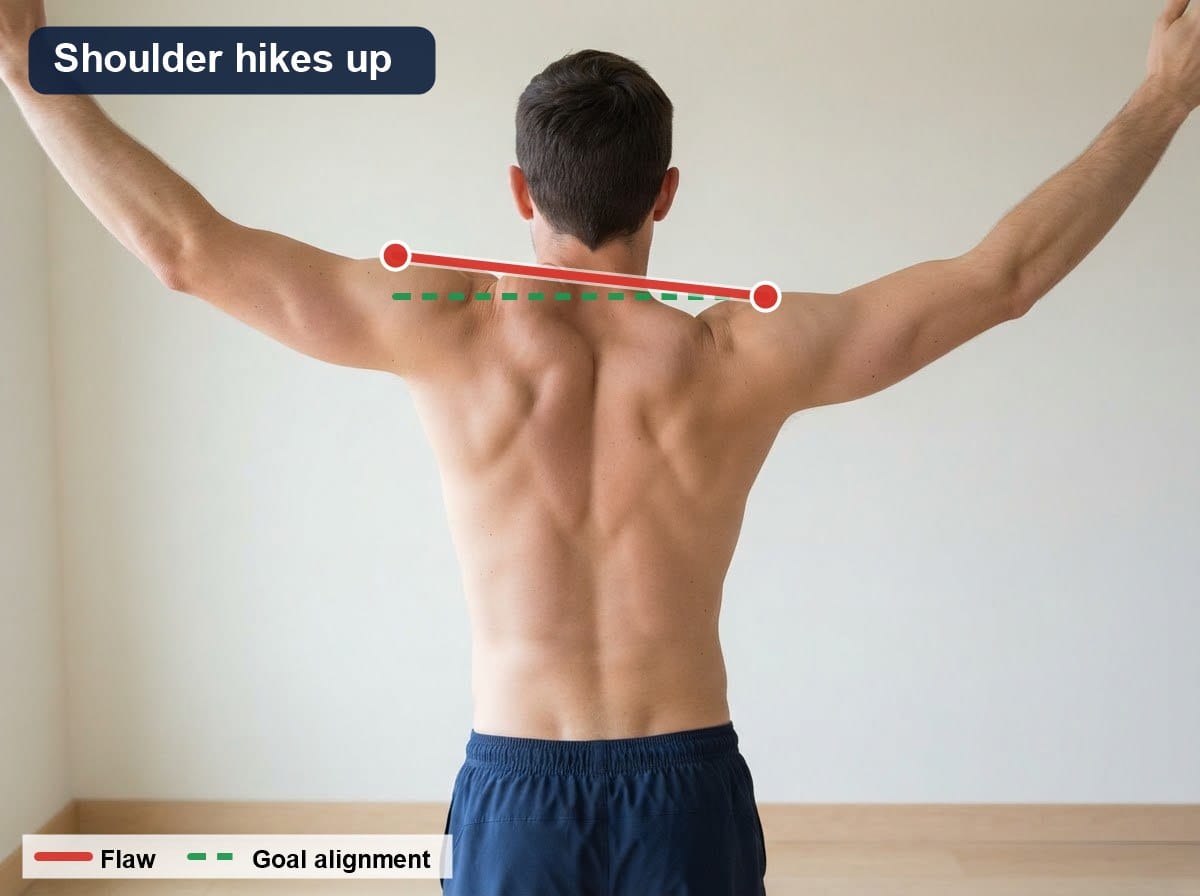
Shoulder impingement pattern
Pinching when the arm goes overhead
Shows up in: Throwing, swimming, pressing and reaching overhead
Why it matters: Irritates the rotator cuff over time
What we check: Shoulder-blade control, upper-back mobility, rotator cuff strength
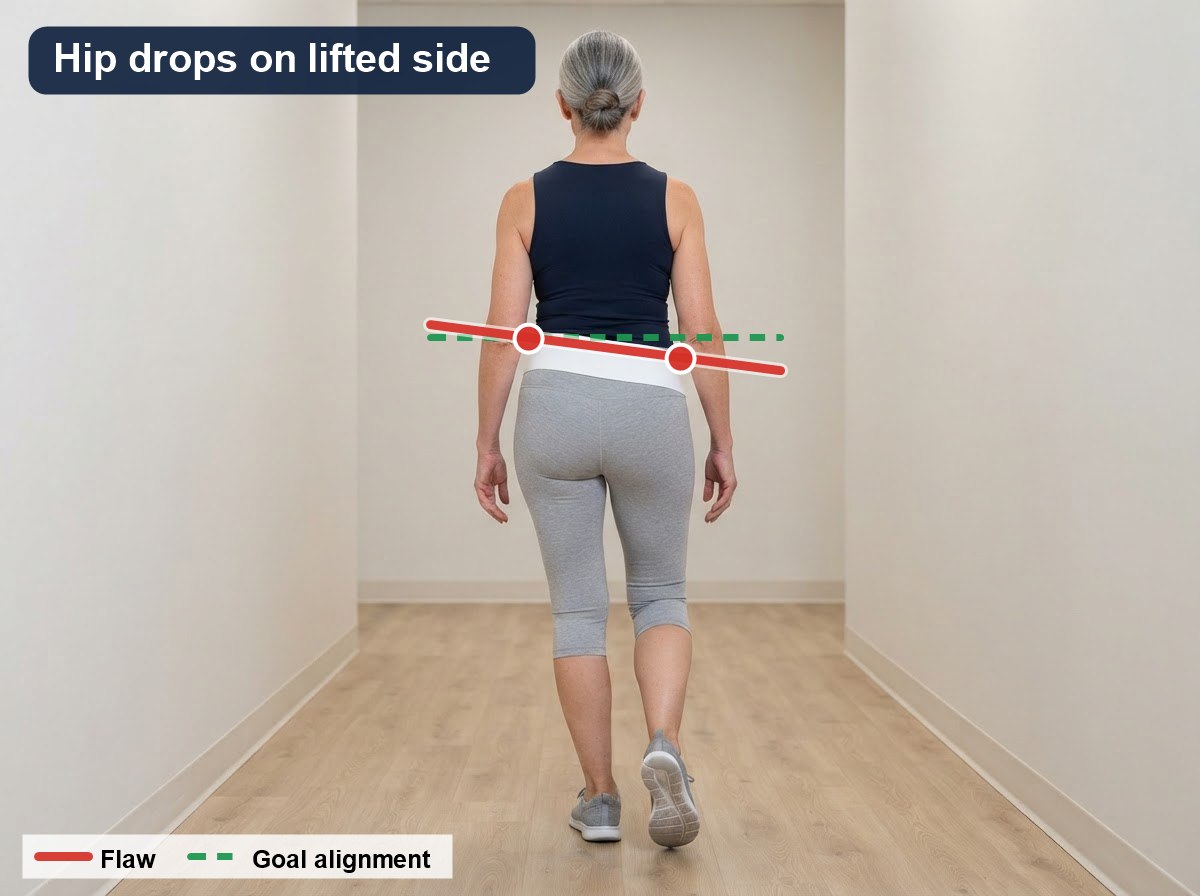
Hip drop
Pelvis dips on one side
Shows up in: Running, single-leg squats and stairs
Why it matters: Loads the hip, IT band, knee and low back
What we check: Glute strength and single-leg control
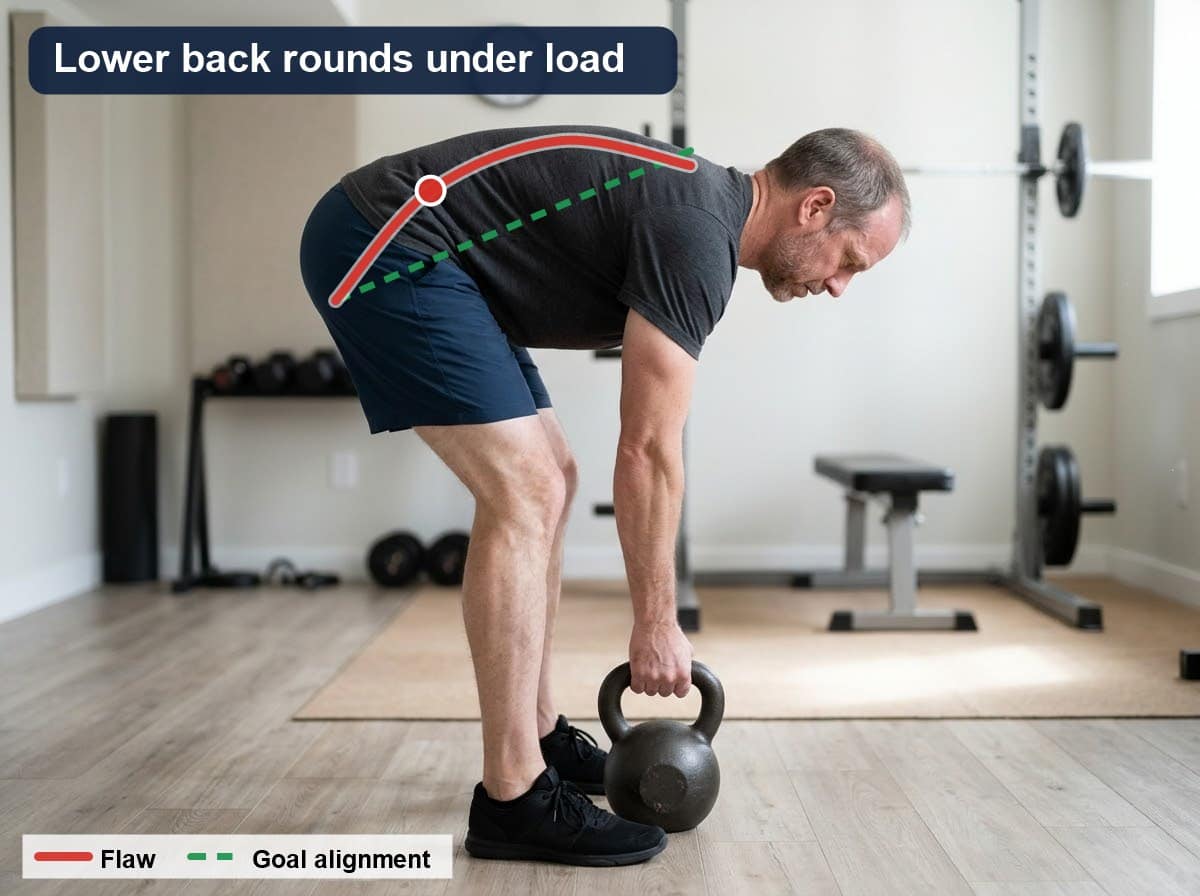
Back rounding under load
The lower back flexes while lifting
Shows up in: Deadlifts, squats and picking things up
Why it matters: A common source of low back strain
What we check: Hip hinge pattern, hip mobility, core bracing
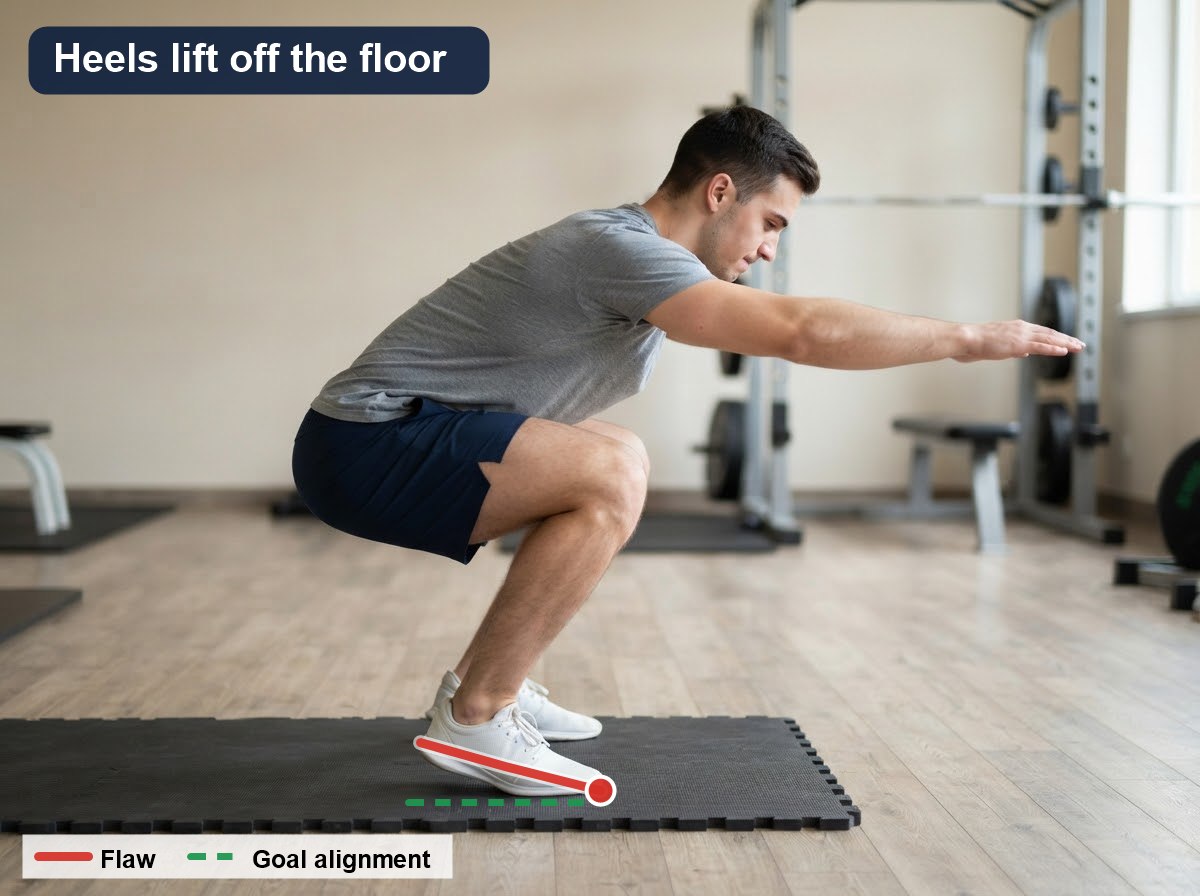
Limited ankle mobility
Heels lift or knees can’t travel forward
Shows up in: Squats, lunges, landing and running
Why it matters: Forces the knees, hips and feet to compensate
What we check: Ankle range of motion and calf flexibility
Red = common flaw · dashed green = the goal
Who it’s for
The screen is a good fit for high school and college student athletes, weekend athletes and lifters, runners adding mileage, active adults who want to keep doing what they love, people returning to activity after an injury has healed, and workers whose jobs involve lifting, carrying or long hours on their feet. For student athletes, it makes a smart preseason check, especially in sports with a lot of jumping, cutting and landing. A parent or guardian joins the session for athletes under 18. It’s an educational and performance service, not a medical diagnosis. If we see something that needs medical care, we’ll tell you and point you in the right direction.
Try this 60-second self-check
Stand in front of a mirror, or have someone film you from the front. Keep a sturdy chair or counter nearby.
- Single-leg squat: Stand on one leg with your arms out in front and slowly bend into a quarter squat, 5 times on each side. Watch for: Does your knee cave inward, or does the opposite hip drop?
- Single-leg balance: Stand on one leg for 30 seconds with your eyes open. Watch for: Do you wobble a lot, reach for support, or does your arch collapse?
- Arms overhead: Stand with your back against a wall and raise both arms straight overhead. Watch for: Does your low back arch off the wall, or do your shoulders shrug up or pinch?
- Bodyweight squat: Squat as low as is comfortable with your heels on the floor. Watch for: Do your heels lift, or does your chest drop toward the floor?
Stop if anything hurts. This isn’t a diagnosis. It’s a quick way to notice patterns worth a closer look.
Noticed one of these? A Strong & Steady screen shows why it happens and what to do about it.
Why a trained eye helps
Apps and generic screens count reps and compare you to a norm. A physical therapist looks at your movement under the demands of your activity, sees where stress concentrates, and decides what to change first.
That’s the purpose of the ELEVATE Strong & Steady Movement Screen. We analyze how you lift, squat, and move, then give you a written report, a corrective exercise plan, and an honest recommendation about whether physical therapy or training makes sense next.
No screen can promise you won’t be injured. It can tell you where your body is being asked to do too much, and what to do about it.
Talk it through
Curious how your body handles load? Schedule a free consultation call and we’ll talk through whether the Strong & Steady Movement Screen fits your goals.
Schedule a free consultation call
Bryan Forton, PT, DPT, is the founder of ELEVATE Therapy Services, a concierge mobile rehabilitation and wellness practice serving Oakland and Macomb County, Michigan.


Recent Comments