
Spinal Cord Injury Rehabilitation at Home
In-Home Spinal Cord Injury Rehabilitation in Oakland and Macomb County, Michigan
Practice real life at home, with therapists and a plan built around your level of injury.
ELEVATE provides in-home physical, occupational, and speech-language therapy for adults living with spinal cord injury in Oakland and Macomb County, Michigan. Licensed therapists work on strength, mobility, self-care, swallowing, and caregiver training in your own home, alongside your physician and rehabilitation team. Visits are private-pay and one-on-one.
- A spinal cord injury (SCI) is damage to the spinal cord, the bundle of nerves that carries signals between the brain and the body. It can cause temporary or permanent changes in feeling, movement, strength and body functions below the level of injury.
- What a person experiences depends on where the cord is injured and how much of it is damaged. Injuries higher in the neck affect more of the body than injuries lower down. Injuries can be complete or incomplete.
- Care starts with emergency and hospital treatment, then rehabilitation to build independence and prevent complications. Rehabilitation continues for life as needs change.
- Physical therapy works on strength, transfers, mobility and conditioning. Occupational therapy works on self-care, hand function and the home. Speech-language pathology helps with swallowing, voice and breathing support.
- ELEVATE Therapy Services brings therapy to your home in Oakland and Macomb County, Michigan. Visits are private-pay and one-on-one.
What a spinal cord injury is
The National Institute of Neurological Disorders and Stroke (NINDS) explains that the spinal cord is a soft, cylindrical column of nerve cells, nerve fibers and blood vessels that extends from the lower part of the brain down through the lower back, running inside a canal in the vertebrae. It sends and receives signals between the brain and the rest of the body, and millions of nerve cells in the cord coordinate complex patterns such as breathing and walking. Direct injury to the cord, or damage to the tissue and bones around it, can cause an SCI.
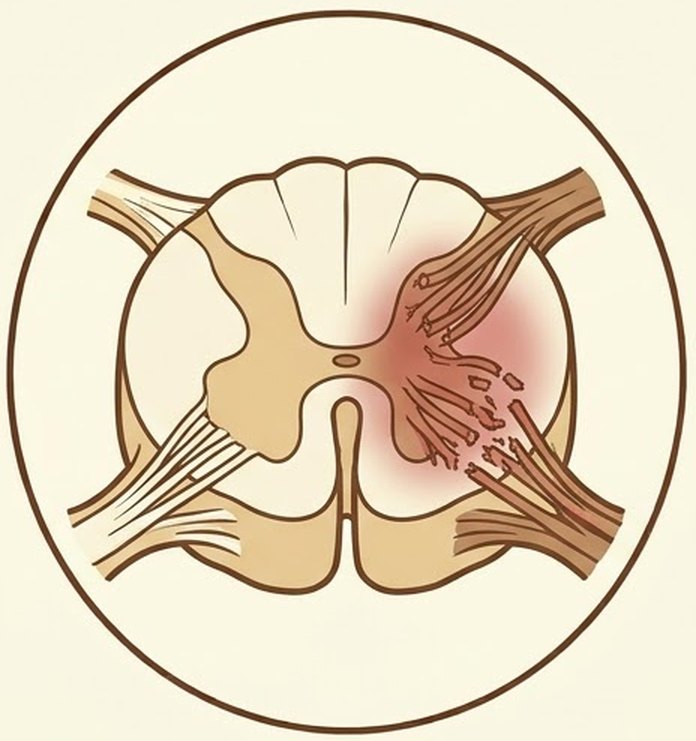
NINDS notes that if an injury causes little nerve cell death, a person can make an almost complete recovery, and that doctors can now predict the likely long-term outcome with reasonable accuracy, which helps people and families set achievable goals.
Causes and risk factors
NINDS reports that motor vehicle accidents and serious falls are the most common causes of SCI in the U.S. Other causes include:
- Acts of violence, mostly gunshot wounds and assaults
- Sports injuries
- Medical or surgical injuries
- Industrial or workplace accidents
- Diseases and conditions that damage the spinal cord
Risk factors include age (between 16 and 30, or after age 65 for dangerous falls), alcohol use, and not wearing proper gear such as a seat belt or protective sports equipment.
Symptoms and types
Symptoms depend on the part of the cord that is damaged and how much damage there is. An SCI can cause one or more of the following:
- Numbness, tingling, or a loss of or change in sensation in the hands and feet
- Paralysis (loss of movement) and weakness in any part of the body
- Pain or pressure in the head, neck or back
- Loss of bladder and bowel control
- Problems with walking, and difficulty breathing
- Changes in sexual function
- Exaggerated reflexes and muscle stiffness (spasticity) that can develop over time
When to get help
- Autonomic dysreflexia is a life-threatening reflex reaction that can occur, especially with higher spinal cord injuries, with sudden very high blood pressure, a pounding headache, sweating or flushing above the injury, and a slow pulse. People and caregivers should know the plan from their medical team and call 911 if it is not resolved immediately.
- Blood clots: calf pain, swelling, warmth or redness, or sudden shortness of breath need emergency care. NINDS notes people with SCI are at increased risk of clots.
- Breathing and pneumonia: fever, cough, or trouble breathing need prompt care, since breathing complications are a leading cause of death after SCI.
- Skin: new red areas, blisters or open sores need prompt attention.
- Any new weakness, loss of sensation or change in bladder or bowel function should be reported to your physician at once.
How a spinal cord injury affects daily life
| What a person may notice | Why it happens | Who helps |
|---|---|---|
| Weakness or paralysis in the arms, trunk or legs | Nerve signals cannot pass the injury, so muscles below it do not receive full commands. | Physical therapy, occupational therapy |
| Loss of sensation, numbness or tingling | Sensory signals from the skin and joints do not reach the brain normally. | Physical therapy, occupational therapy, with your physician |
| Muscle stiffness, spasms or tightening of joints | Reflexes below the injury become exaggerated, increasing muscle tone (spasticity). | Your physician, with physical therapy |
| Trouble with dressing, bathing, eating and hand tasks | Weak arms and hands and limited trunk control make self-care difficult. | Occupational therapy |
| Trouble breathing deeply, coughing or swallowing | Injury near the neck weakens the muscles of breathing and swallowing. | Speech-language pathology, with your physician and respiratory team |
| Difficulty moving in bed, transferring or getting around | Weakness, balance and sensation changes limit mobility. | Physical therapy, occupational therapy |
| Worry, low mood or isolation | Major life changes, pain and loss of independence affect emotional health. | Whole team, with your physician |
How care works
NINDS describes immediate treatment as stabilizing the spine, sometimes with surgery to remove fractured bones or relieve pressure. Care then focuses on preventing and managing complications, which can include breathing problems, pneumonia, circulation and blood clot problems, stiffness and changes in muscle tone, and autonomic dysreflexia. People with an SCI may need special training with breathing and swallowing, and caregivers may need training as well.
Home-based rehabilitation builds on hospital and inpatient rehabilitation by practicing in the places where daily life happens: the bed, bathroom, kitchen, doorways and car. Therapists also coordinate with the physician, physiatrist and other specialists, and train family members in safe transfers, skin checks and recognizing emergencies.
What physical, occupational and speech therapy each do
Physical therapy: strength, mobility and independence
- Strengthening and conditioning of the muscles that still work, including trunk and upper body
- Bed mobility, transfers and wheelchair skills, and training for caregivers in safe assistance
- Standing, walking and balance work when appropriate, with bracing or devices as advised
- Stretching and positioning programs to manage stiffness and prevent joint tightening, with your physician guiding any medical treatment of spasticity
- Cardiovascular conditioning adapted to your level of injury
- Fall prevention and a written home program
Occupational therapy: self-care and the home
- Retraining dressing, bathing, grooming, eating and hand tasks, using adaptive equipment and techniques
- Hand and arm strengthening and, when appropriate, tenodesis and splint training
- Wheelchair seating and pressure relief routines to protect the skin
- Home modifications such as ramps, bathroom set-up and kitchen access
- Return to work, school and community, and guidance on driving evaluation and adaptive vehicle options
Speech-language pathology: swallowing and communication
- Swallowing evaluation and strategies to protect the airway
- Voice and breath-support strategies when breathing muscles are weak
- Communication supports as needed
- Training for caregivers in safe eating and aspiration precautions
Supporting services
What an ELEVATE home visit looks like
- Review: the injury, level and type, medicines, precautions and your medical team’s recommendations.
- Assessment: strength, sensation, transfers, mobility, self-care, breathing and swallowing, and the home.
- Home set-up: bed, bathroom, kitchen, entrances and equipment.
- Plan: goals that matter to you and your family, with a written program and caregiver training.
- Communication: progress shared with your physician or physiatrist as appropriate.
ELEVATE serves adults in Oakland and Macomb County, Michigan, with licensed physical, occupational and speech-language therapists. See Payments & Insurance for details.
Questions families ask
What is the difference between a complete and incomplete spinal cord injury?
Can function return after a spinal cord injury?
What is autonomic dysreflexia?
Can therapy at home help after hospital rehabilitation?
Why is pneumonia such a concern?
Do I need a referral or does insurance cover this?
Does ELEVATE replace my medical team?
Trusted resources for spinal cord injury
These organizations are the leading sources of education and support for this condition. We are not affiliated with them.
Related guides
Browse every condition we treat on our Conditions We Treat page.
Sources and medical note
- National Institute of Neurological Disorders and Stroke: Spinal Cord Injury.
- Christopher & Dana Reeve Foundation: National Paralysis Resource Center and Paralysis Resource Guide.
This page is educational and is not medical advice. It does not replace your physician’s or rehabilitation team’s care. Always follow your medical team’s instructions. After any accident with a suspected spinal injury, trouble breathing, signs of a blood clot, or symptoms of autonomic dysreflexia, call 911 immediately.
Contact Elevate Therapy Services
Need to reach us? Use our web form to send a message now, or contact us using one of the methods below.
We will be in contact within one to two business days.
Phone: (248) 266-5721
Fax: (586) 788-1704
