
Foot and Ankle Injury Therapy at Home: Plantar Fasciitis, Ankle Sprains and Shin Splints
In-Home Foot and Ankle Therapy in Oakland and Macomb County, Michigan
Get back on your feet with strength, balance, and a plan to prevent the next injury.
ELEVATE provides in-home physical and occupational therapy for adults with plantar fasciitis, ankle sprains, shin splints, and other foot and ankle problems in Oakland and Macomb County, Michigan. Licensed therapists work on motion, strength, balance, and daily tasks in your own home, alongside your physician. Visits are private-pay and one-on-one.
- The foot and ankle carry your whole body weight with every step. Plantar fasciitis (heel pain), ankle sprains, shin splints and Achilles tendon pain are among the most common problems, in athletes and in everyday life.
- Most foot and ankle problems improve with conservative care, but an untreated or repeated injury can lead to long-term pain, weakness and instability.
- Rehabilitation restores motion, strength, balance and movement patterns, and helps prevent the next injury.
- Physical therapy leads recovery, and occupational therapy helps with daily tasks, footwear and home setup while you heal.
- ELEVATE Therapy Services brings therapy to your home in Oakland and Macomb County, Michigan. Visits are private-pay and one-on-one.
How the foot and ankle work and what goes wrong
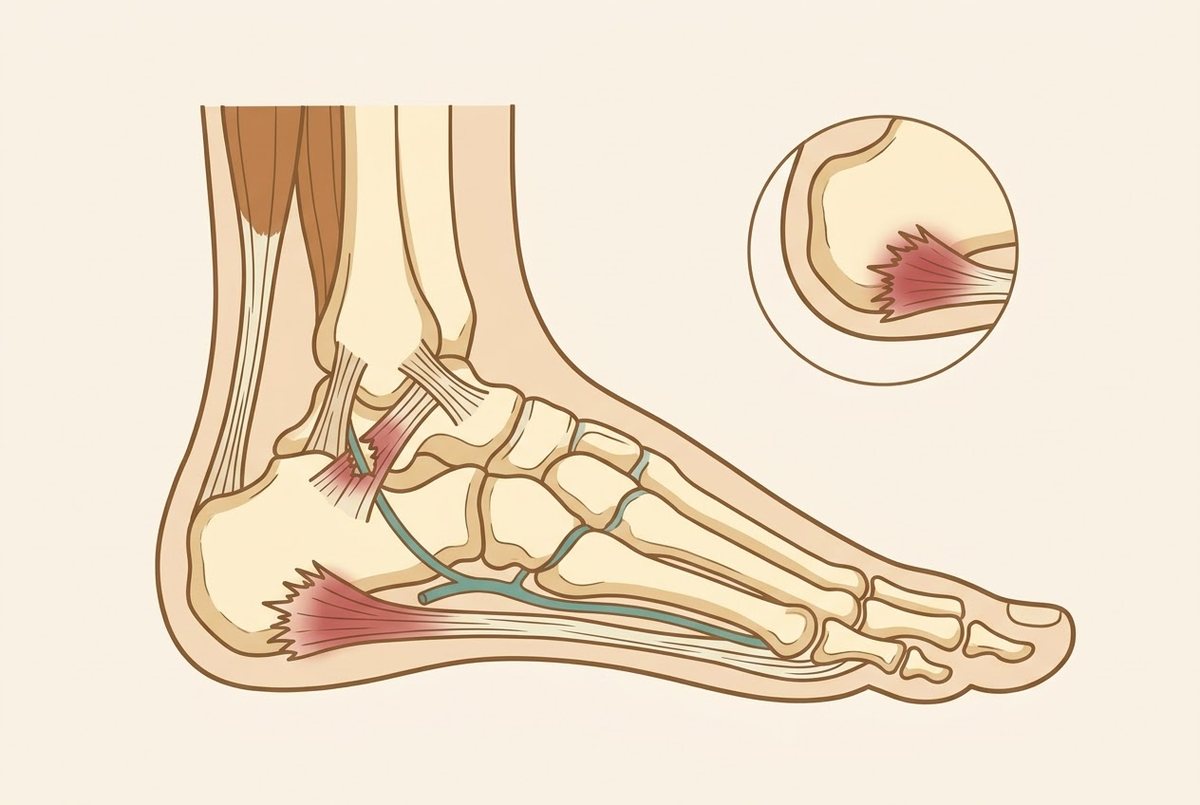
The foot is built to be both a flexible shock absorber and a rigid lever. The plantar fascia is a strong band of tissue that supports the arch. Ligaments hold the ankle bones together, especially on the outer side, and tendons such as the Achilles connect the calf muscles to the heel. Overload, a sudden twist, or a gradual increase in activity can irritate or injure any of these.
Causes and risk factors
Plantar fasciitis
In most cases plantar fasciitis develops without a specific, identifiable reason. AAOS lists these factors that make it more likely:
- New or increased activity
- Repetitive high-impact activity such as running, dancing or sports
- Standing for long periods on hard surfaces, for example in healthcare, factory work and teaching
- Flat feet or a high arch
- Tight calf muscles
- Excess body weight
- Age: it is most common between 40 and 60
Ankle sprains and shin splints
Ankle sprains happen when the foot turns inward or the ankle twists, at every activity level and age. Repeated sprains can lead to chronic ankle pain, arthritis and instability, according to AAOS, especially if a severe sprain is not treated and rehabilitated. Shin splints usually follow a sudden increase in running or vigorous activity, hard surfaces or worn shoes, and are more likely when starting a fitness program.
Symptoms
- Plantar fasciitis: pain on the bottom of the foot at the heel, often worst with the first steps after rest and easing as the foot warms up
- Ankle sprain: pain, swelling, bruising and tenderness over the injured ligaments, with a feeling that the ankle gives way
- Shin splints: aching along the inner edge of the shin that starts with activity and usually eases with rest
- Achilles tendinopathy: stiffness and pain in the tendon, often worse in the morning and at the start of activity
- Trouble pushing off, climbing stairs or standing for long periods with any of these
When to get help
- See your physician if an ankle stays swollen or painful for several weeks despite conservative treatment, or if you have trouble putting weight on it, as AAOS advises, to rule out a severe sprain or fracture.
- Get care promptly for a sudden pop or sharp pain at the back of the heel with weakness pushing off, which can signal an Achilles rupture.
- Calf pain, swelling, warmth or redness after an injury or surgery can signal a blood clot and needs urgent attention.
- Heel pain with fever, redness or numbness needs medical evaluation.
How foot and ankle problems affect daily life
| What a person may notice | Why it happens | Who helps |
|---|---|---|
| Sharp heel pain with the first steps in the morning or after sitting | The irritated plantar fascia is stressed when it is suddenly loaded after rest. | Physical therapy |
| An ankle that rolls, swells or gives way | Stretched or torn ligaments no longer control the joint, and balance and muscle control are reduced. | Physical therapy |
| Aching shins when walking or running | Repeated impact and overload irritate the tissue along the shinbone. | Physical therapy |
| Tight calves, stiff ankle, trouble climbing stairs | Injury and inactivity shorten the calf muscles and reduce ankle motion. | Physical therapy |
| Trouble standing to cook, work or shop | Pain with weight bearing limits time on your feet. | Occupational therapy, physical therapy |
| Loss of confidence on uneven ground, and falls | Lost ankle control and balance after an injury raises the chance of re-injury. | Physical therapy |
How care works
AAOS notes that most ankle sprains heal with conservative treatment such as ice, elevation, over-the-counter medicines and simple rehabilitation exercises, while a severe sprain may need medical evaluation and sometimes surgery to repair or reconstruct the ligaments. Plantar fasciitis and shin splints are also usually managed without surgery, with relative rest from aggravating activity, stretching, supportive footwear or orthotics, and gradual return to activity. Overdoing exercise is a common reason for shin splints to come back.
The APTA clinical practice guidelines for plantar fasciitis, lateral ankle ligament sprains and midportion Achilles tendinopathy support education, progressive loading exercise, mobility work and, when needed, taping or footwear changes. A therapist matches these to your injury and adjusts them as you improve.
What physical and occupational therapy each do
Physical therapy: rebuilding a strong, steady foot and ankle
- Assessment of swelling, motion, strength, balance, foot posture, footwear and walking or running patterns
- Calf, foot and ankle stretching and gradual loading programs for the plantar fascia and Achilles tendon
- Ankle strength and balance training, including uneven surfaces, to restore control after a sprain
- Taping, footwear advice and orthotic recommendations when appropriate
- Gradual return to walking, running, jumping and sport programs, with your physician’s clearance
- A written home program and a plan to prevent the next injury
Occupational therapy: getting through the day while it heals
- Safe ways to do daily tasks on crutches, in a boot or with limited weight bearing
- Home setup for stairs, bathroom and kitchen, and equipment such as a shower chair
- Footwear and standing-surface changes at work or at home
- Pacing and energy conservation during recovery
Supporting services
What an ELEVATE home visit looks like
- Review: how the problem started, activity and footwear, medicines and your doctors’ recommendations.
- Assessment: swelling, motion, strength, balance, foot posture, walking and daily tasks.
- Home setup: stairs, bathroom, kitchen and shoes you wear most.
- Plan: goals that matter to you and a written home program.
- Communication: progress shared with your physician as appropriate.
ELEVATE serves adults in Oakland and Macomb County, Michigan, with licensed physical and occupational therapists. See Payments & Insurance for details.
Questions families ask
How long does plantar fasciitis take to get better?
Should I stop walking or running with shin splints?
Do I need an X-ray for an ankle sprain?
Will I need orthotics or a brace?
Can an old ankle sprain cause long-term problems?
Do I need a referral or does insurance cover this?
Does ELEVATE replace my doctor?
Trusted resources for foot and ankle problems
These organizations are the leading sources of education and support for this condition. We are not affiliated with them.
Related guides
Browse every condition we treat on our Conditions We Treat page.
Sources and medical note
- American Academy of Orthopaedic Surgeons, OrthoInfo: Plantar Fasciitis and Bone Spurs, Sprained Ankle and Shin Splints.
- Koc TA et al. Heel Pain: Plantar Fasciitis: Revision 2023. Journal of Orthopaedic & Sports Physical Therapy, 2023 (APTA).
- Martin RL et al. Ankle Stability and Movement Coordination Impairments: Lateral Ankle Ligament Sprains Revision 2021. Journal of Orthopaedic & Sports Physical Therapy, 2021 (APTA).
- Martin RL et al. Achilles Pain, Stiffness, and Muscle Power Deficits: Midportion Achilles Tendinopathy Revision 2018. Journal of Orthopaedic & Sports Physical Therapy, 2018 (APTA).
This page is educational and is not medical advice. It does not replace your physician’s care. Always follow your physician’s instructions. After an injury with severe pain, a deformed ankle or foot, a cold or numb foot, or if you cannot bear weight, call 911 or go to the emergency department.
Contact Elevate Therapy Services
Need to reach us? Use our web form to send a message now, or contact us using one of the methods below.
We will be in contact within one to two business days.
Phone: (248) 266-5721
Fax: (586) 788-1704
