
Fall Prevention and Balance Physical Therapy at Home
In-Home Fall Prevention in Oakland and Macomb County, Michigan
Evidence-informed balance, strength, and home safety care from licensed physical therapists.
ELEVATE provides in-home fall prevention and balance physical therapy for adults in Oakland and Macomb County, Michigan. A licensed physical therapist assesses your strength, balance, and walking at home, reviews your living space, and builds an individualized program to help you stay steady and independent. Visits are private-pay and one-on-one.
- More than one in four adults age 65 and older falls each year, and falling once doubles the chance of falling again. Fewer than half tell their doctor.
- Falls usually have several causes at once: weak legs, balance and walking problems, some medicines, vision problems, foot pain, and hazards at home.
- Many of these causes can be changed. The U.S. Preventive Services Task Force recommends exercise programs to reduce falls in older adults at increased risk.
- Physical therapy builds strength, balance and walking. Occupational therapy makes daily routines and the home safer. Speech-language pathology helps when thinking and attention affect safety.
- ELEVATE Therapy Services brings fall-prevention therapy to your home in Oakland and Macomb County, Michigan. Visits are private-pay and one-on-one.
Why falls matter
Falls are not a normal or unavoidable part of aging. The Centers for Disease Control and Prevention (CDC) reports that falls are the leading cause of injury death among adults 65 and older, and that millions of older adults are treated in emergency departments for falls each year. Falls are also the most common cause of traumatic brain injury in older adults, and most hip fractures are caused by falls.
The effects go beyond injury. After a fall, many people become afraid of falling again and move less. Less movement weakens the muscles and balance that protect against the next fall, which is why preventing the first fall, and the second, matters so much to staying independent at home.
Why falls happen
Staying upright is a team effort between the eyes, the inner ear, the nerves in the feet and joints that sense position, the brain that processes it all, and the muscles that respond. A problem with any one of them can raise fall risk, and most falls result from a combination of risk factors. The more risk factors a person has, the greater the chance of falling.
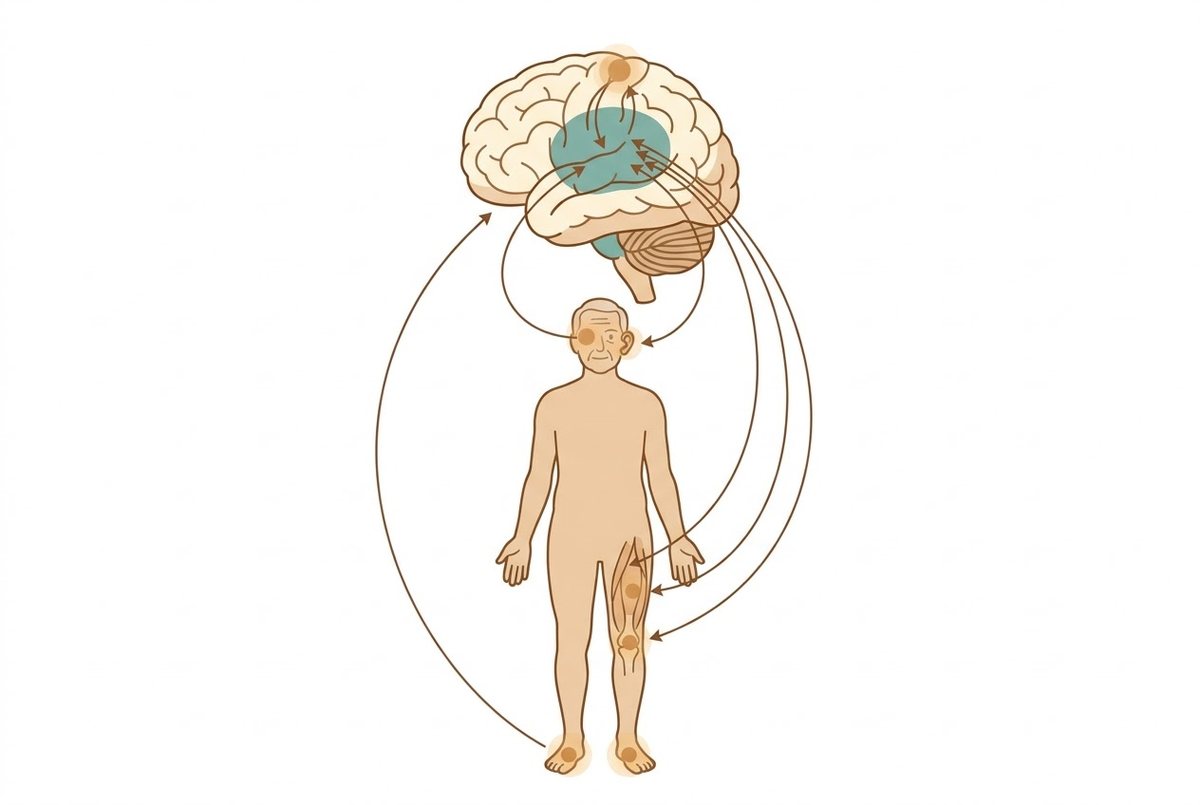
| Risk factor | Why it raises risk | Who helps |
|---|---|---|
| Lower-body weakness | Weak hip, thigh and ankle muscles make it harder to catch yourself after a stumble, stand up from a chair, or climb stairs. | Physical therapy |
| Walking and balance problems | Slower reactions, shorter steps and reduced feeling in the feet make walking less steady, especially on uneven ground or in the dark. | Physical therapy |
| Some medicines | Certain medicines, including sedatives, tranquilizers and antidepressants, can cause drowsiness, dizziness or blood pressure drops. Even some over-the-counter products can affect balance. | Your physician or pharmacist (never stop a medicine on your own). Therapists report concerns. |
| Vision problems | Poor depth perception, glare or low contrast make steps, curbs and clutter harder to see. | Your eye doctor, with lighting changes from occupational therapy |
| Foot pain or poor footwear | Pain changes how you walk, and slippery or loose shoes reduce grip and stability. | Physical therapy, with your podiatrist when needed |
| Low vitamin D | Low vitamin D is linked to weaker muscles and falls. Testing and treatment are decided by your doctor. | Your physician, with a dietitian |
| Home hazards | Broken or uneven steps, throw rugs, clutter, poor lighting and a slippery tub or shower create tripping and slipping risks. | Occupational therapy, AdaPTive Mobility Solutions |
| Neurological and medical conditions | Stroke, Parkinson’s disease, neuropathy, arthritis, dizziness and memory changes can each affect strength, balance, judgment or reaction time. | Physical and occupational therapy, speech-language pathology when thinking is affected |
What to do after a fall
Many falls do not cause an injury, but about one in three who fall report an injury that needs treatment or limits activity. Head injuries can be especially serious for people who take blood thinners.
- Call your doctor the same day if you hit your head while taking a blood thinner, have new pain or swelling, or feel different after the fall.
- Tell your doctor about every fall, even one with no injury. Fewer than half of older adults who fall mention it, but it is useful information for preventing the next one.
- Write down what happened: where, when, what you were doing, and how you felt just before. A therapist can use this to find the cause.
How fall risk is measured
Fall risk is something a therapist can actually measure. The CDC’s STEADI program describes three simple tests that many clinicians use. Your therapist will choose the tests that fit your abilities.
Beyond these tests, a thorough assessment also covers your fall history, medicines, vision, feet and footwear, blood pressure changes when you stand, fear of falling, and the layout of your home. The result is a plan aimed at your own risk factors.
What reduces fall risk
The U.S. Preventive Services Task Force recommends exercise interventions to prevent falls in community-dwelling adults 65 and older who are at increased risk. Strength, balance and walking practice are the foundation, and the best programs are tailored to the person and made harder gradually.
Fall prevention is rarely one fix. It combines exercise, a safer home, medicine and vision review with your doctor, and steady follow-through. Your therapist works on the parts that therapy can change and helps you coordinate the rest with your physician.
What physical, occupational and speech therapy each do
Physical therapy: building the strength and balance that prevent falls
A physical therapist assesses how you stand, walk, turn and recover your balance, then builds a progressive program for the gaps that increase your risk.
- Lower-body strengthening for the hips, thighs and ankles
- Balance training that moves from steady standing to more challenging positions and surfaces
- Walking practice, including turns, curbs and stairs
- Practice getting up from a chair, the floor or the bed safely
- Recommendations for a cane or walker when appropriate, with training in how to use it
- Footwear advice and coordination with your physician or podiatrist
Occupational therapy: making the home and daily routines safer
Occupational therapists look at how you actually move through your day and your home, and adjust the environment and the routine, not just the person.
- Home safety review: stairs, entrances, bathroom, bedroom, lighting and clutter
- Safer ways to bathe, dress, cook and carry things
- Equipment recommendations such as grab bars, shower chairs and raised toilet seats
- Strategies for vision changes, fatigue and low energy
- Training for family and caregivers in how to help without causing harm
Speech-language pathology: when thinking affects safety
Memory, attention and judgment all play a part in staying safe. When they change, a speech-language pathologist can assess them and teach practical strategies, such as slowing down, using checklists and building routines that reduce risky situations.
Supporting services
These services complement core fall-prevention therapy and are used when your doctor agrees.
What an ELEVATE home visit looks like
- Review: your fall history, medicines list, medical conditions and your doctors’ recommendations.
- Assessment: standardized strength, walking and balance tests chosen for your abilities.
- Home review: entrances, stairs, bathroom, bedroom, lighting and walkways.
- Plan: goals that matter to you, a written home program, and training for family and caregivers.
- Communication: progress shared with your physician as appropriate.
ELEVATE serves adults in Oakland and Macomb County, Michigan, with licensed physical, occupational and speech-language therapists. See Payments & Insurance for details.
Questions families ask
Are falls a normal part of getting older?
Should I tell my doctor about a fall if I was not hurt?
Can exercise really reduce falls?
What if I am afraid of falling?
Will I need a cane or walker?
Do I need a referral or does insurance cover this?
Does ELEVATE replace my doctor?
Trusted resources for fall prevention
These organizations are the leading sources of education and support for this condition. We are not affiliated with them.
Related guides
Browse every condition we treat on our Conditions We Treat page.
Sources and medical note
- Centers for Disease Control and Prevention: Facts About Older Adult Falls and About Older Adult Fall Prevention.
- CDC STEADI: Older Adult Fall Prevention (fall-risk tests and clinician resources).
- U.S. Preventive Services Task Force: Falls Prevention in Community-Dwelling Older Adults: Interventions.
- National Council on Aging: Falls Prevention for Older Adults (falls-risk check and home safety checklist).
This page is educational and is not medical advice. It does not replace your physician’s care. Always follow your physician’s instructions. If you fall and have severe pain, a head injury with confusion, or signs of stroke, call 911 immediately.
Contact Elevate Therapy Services
Need to reach us? Use our web form to send a message now, or contact us using one of the methods below.
We will be in contact within one to two business days.
Phone: (248) 266-5721
Fax: (586) 788-1704
