
Strong & Steady: Injury Prevention Movement Screen
Find the weak link before it becomes an injury.
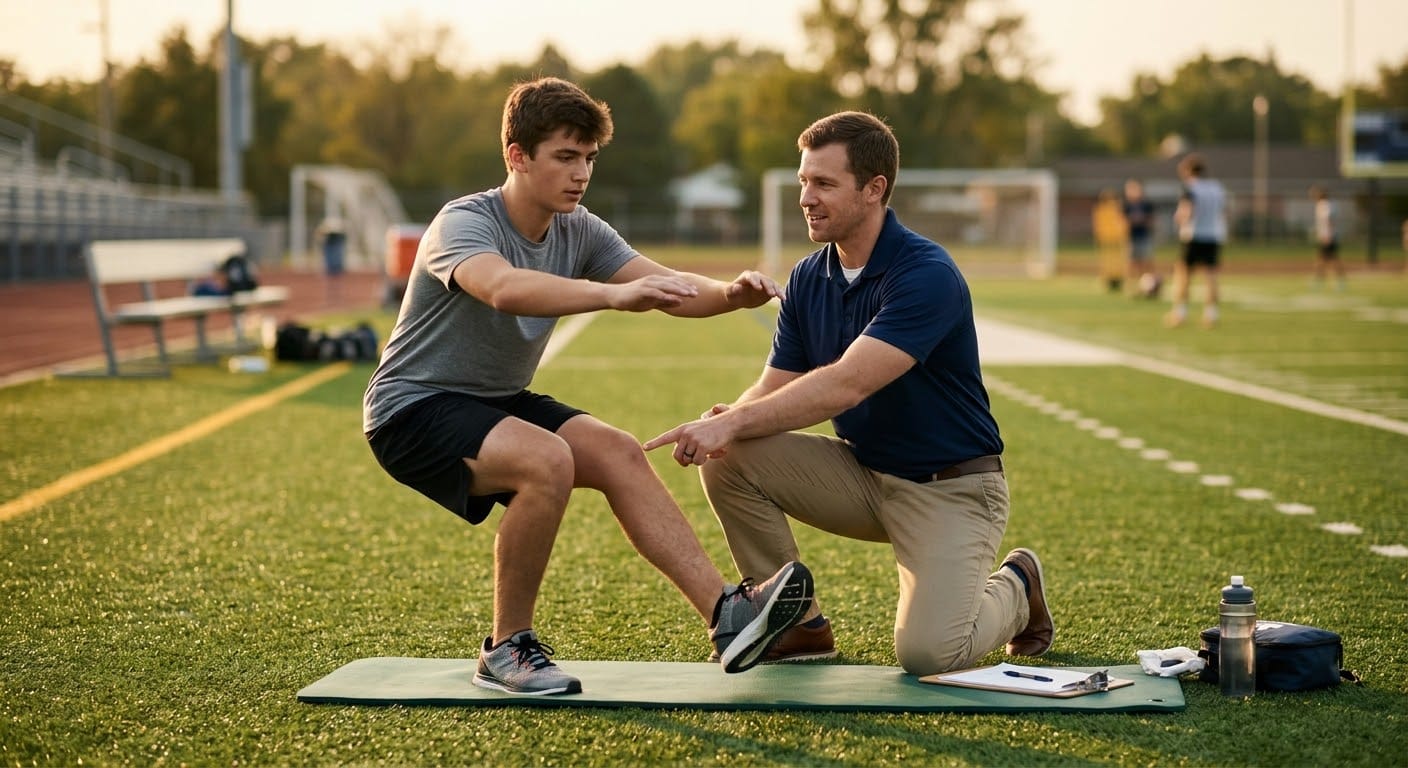
The ELEVATE Strong & Steady Movement Screen is a physical therapist’s detailed analysis of how you actually move, so your training, work, and sport can keep going.
What the screen is
Most people find out how well their body handles load only after something hurts. The Strong & Steady Screen looks earlier.
A licensed physical therapist watches you perform real tasks, such as lifting from the floor, placing an object overhead, squatting, and changing direction. We assess how stress distributes across your back, hips, knees, and ankles in all three planes of motion. Then we explain what we see and what to do about it.
This is not a generic checklist. Each movement is judged against the demands of the task and against your body, sport, and goals.
What we look at
We evaluate the movement and then deliberately challenge it. Depending on your activity, that can include:
- Balance and sensory input: how well you stay organized when vision, joint position sense, or surface stability change
- Complexity: how you handle several tasks in sequence
- Dynamic movement: direction changes, shuffles, and acceleration
- Environment: how conditions and stress change your performance
- Integration: whether the body works as one unit or as isolated parts
- Stability: how well your core and joints control load without external support
- Unpredictability: your response to movement you can’t plan in advance
- Rhythm and timing: the sequencing of joints and muscles
- Range of motion: whether you have the motion the task demands
- Perturbation: how you recover when force is applied unexpectedly
- Impact and jumping demands: how you absorb and produce force, when relevant to your sport
Any of these can be under-trained or over-trained. Both can hurt performance and raise injury risk.
What we look for
Common movement flaws we screen for
These patterns are common in athletes, lifters and active adults. Spotting one doesn’t mean you’re injured. It shows where to focus before small problems turn into pain.
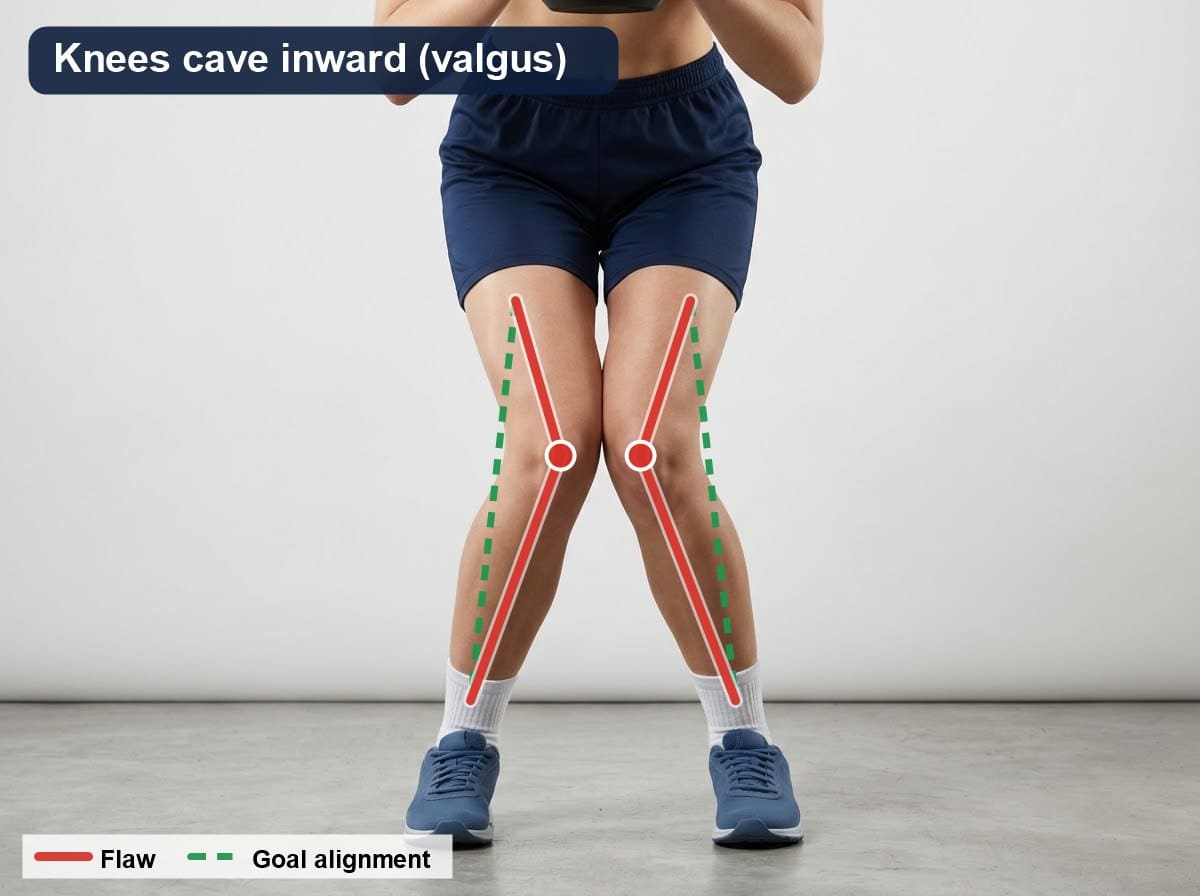
Knee valgus collapse
Knees cave inward
Shows up in: Squats, jump landings, cutting and stairs
Why it matters: Adds stress to the ACL and the kneecap
What we check: Hip strength and control, ankle mobility, landing mechanics
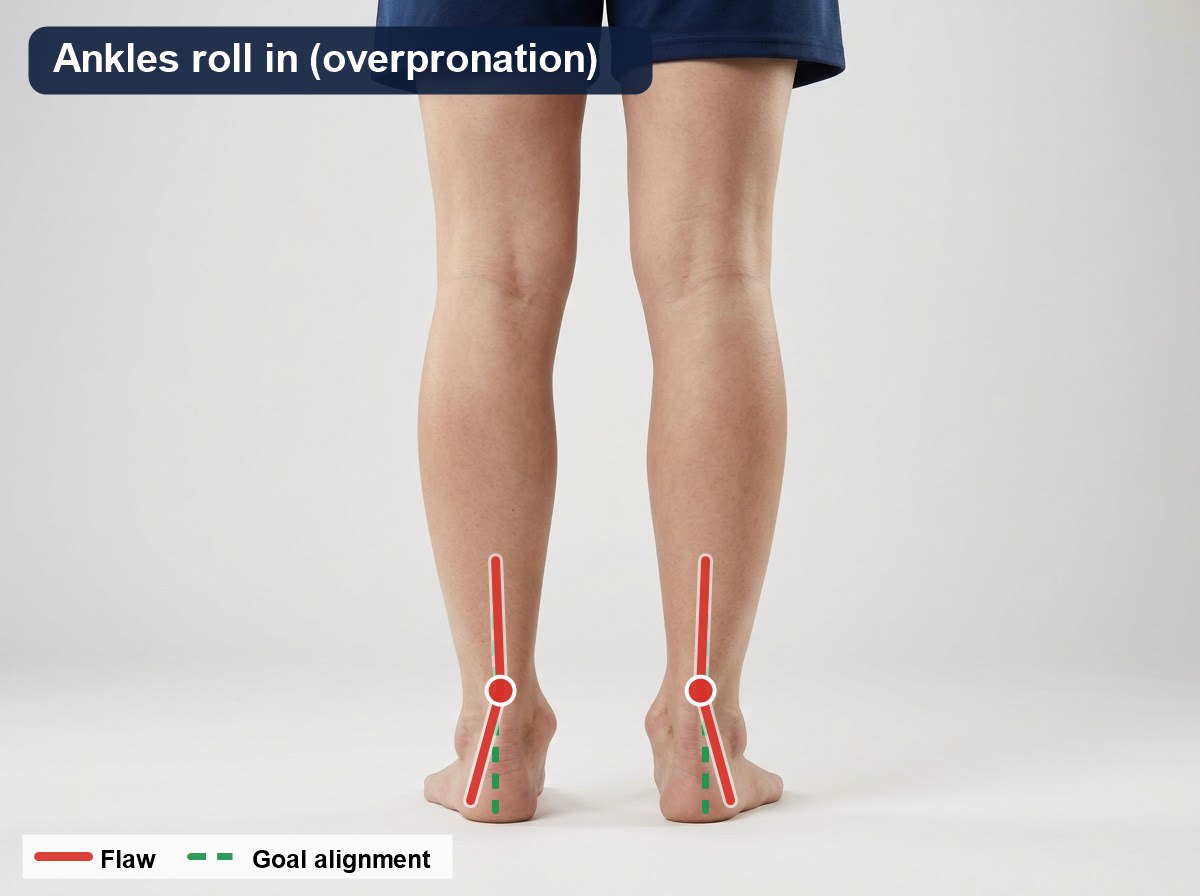
Overpronation
Arches flatten and ankles roll in
Shows up in: Walking, running and single-leg balance
Why it matters: Can feed shin, arch, heel and knee pain
What we check: Foot and calf strength, ankle mobility, balance, footwear
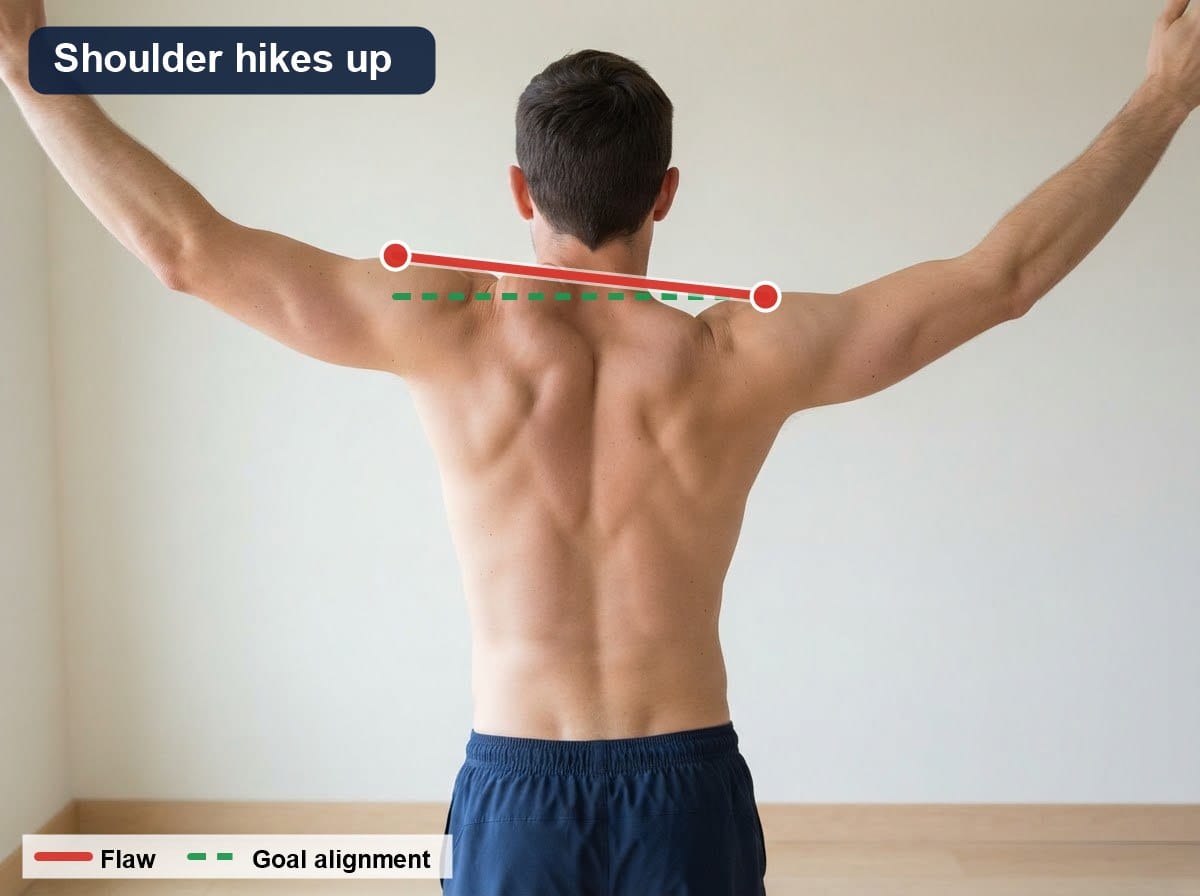
Shoulder impingement pattern
Pinching when the arm goes overhead
Shows up in: Throwing, swimming, pressing and reaching overhead
Why it matters: Irritates the rotator cuff over time
What we check: Shoulder-blade control, upper-back mobility, rotator cuff strength
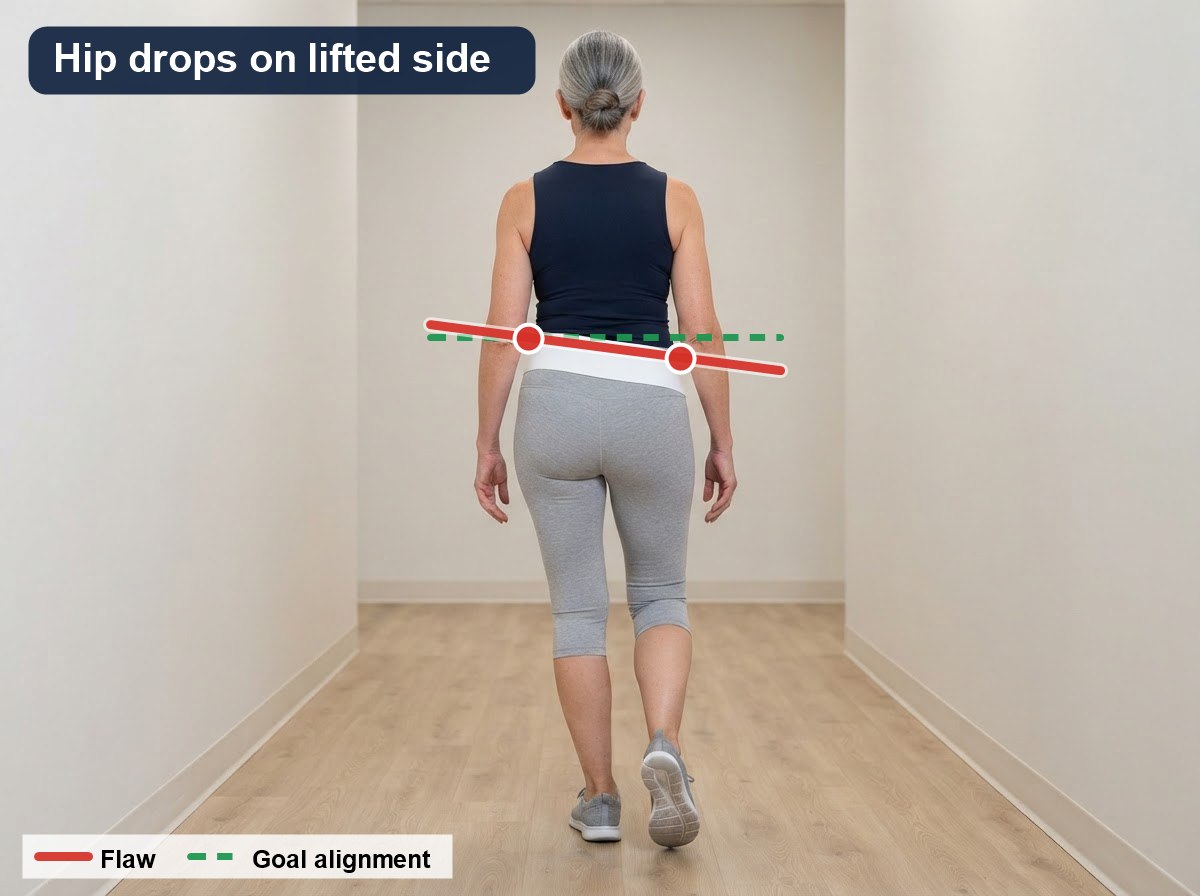
Hip drop
Pelvis dips on one side
Shows up in: Running, single-leg squats and stairs
Why it matters: Loads the hip, IT band, knee and low back
What we check: Glute strength and single-leg control
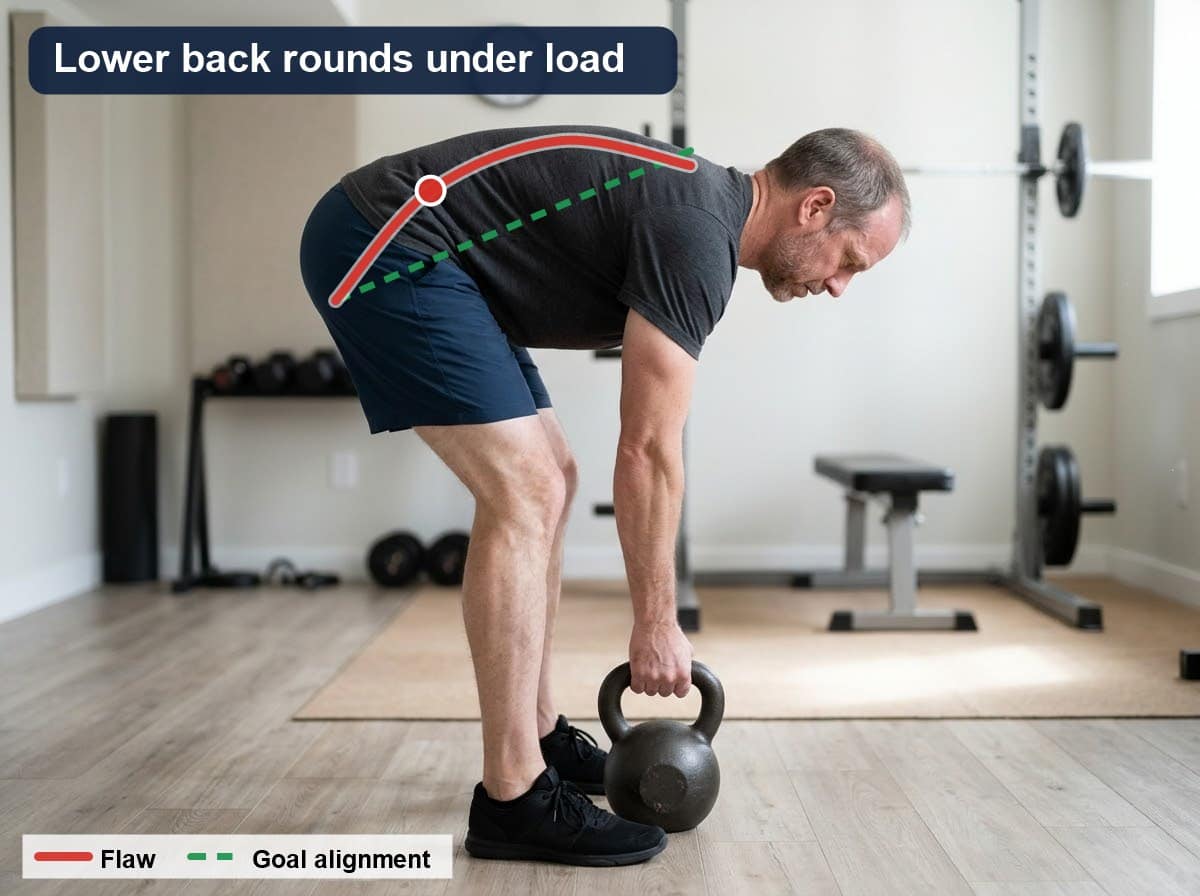
Back rounding under load
The lower back flexes while lifting
Shows up in: Deadlifts, squats and picking things up
Why it matters: A common source of low back strain
What we check: Hip hinge pattern, hip mobility, core bracing
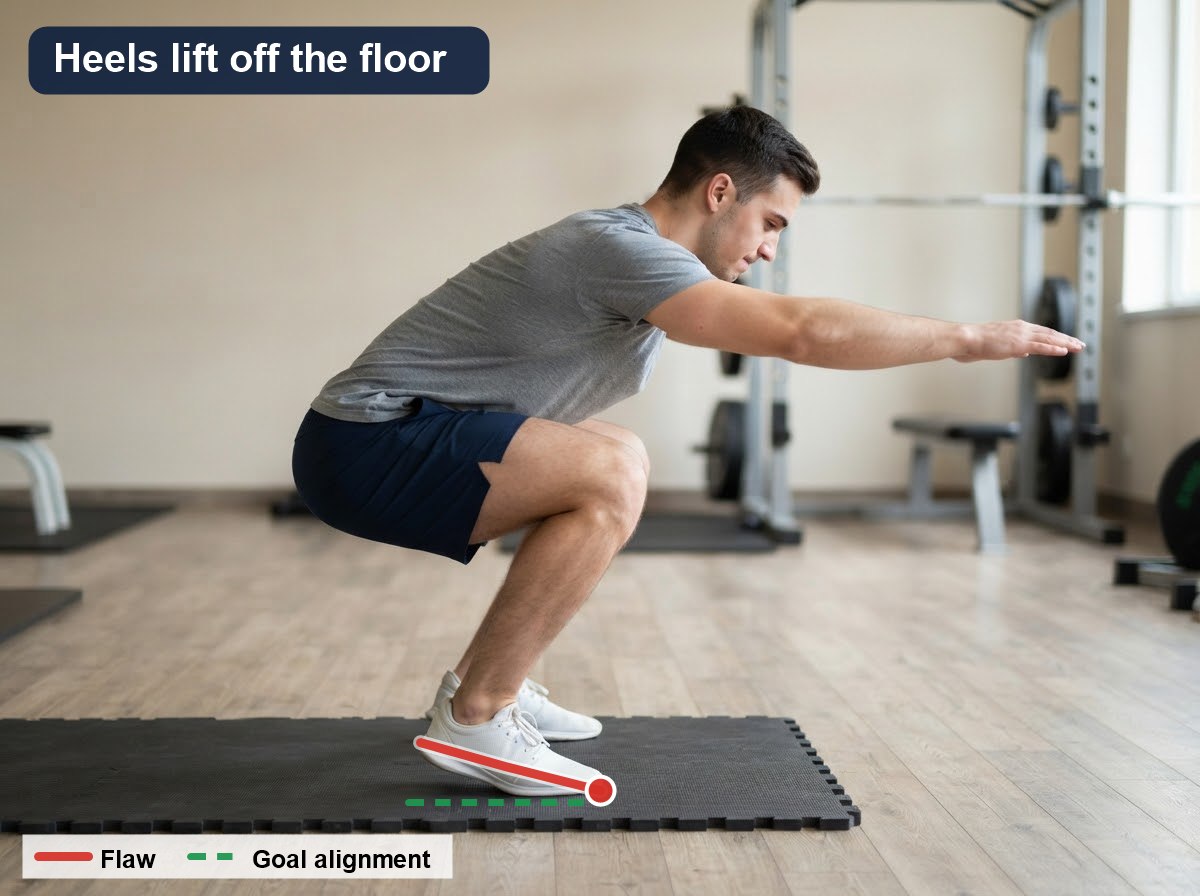
Limited ankle mobility
Heels lift or knees can’t travel forward
Shows up in: Squats, lunges, landing and running
Why it matters: Forces the knees, hips and feet to compensate
What we check: Ankle range of motion and calf flexibility
Red = common flaw · dashed green = the goal
How it works
Free consultation call
We learn your goals, activity, and concerns, and confirm the screen is a fit. This call is not an evaluation and does not include clinical advice.
Your screen
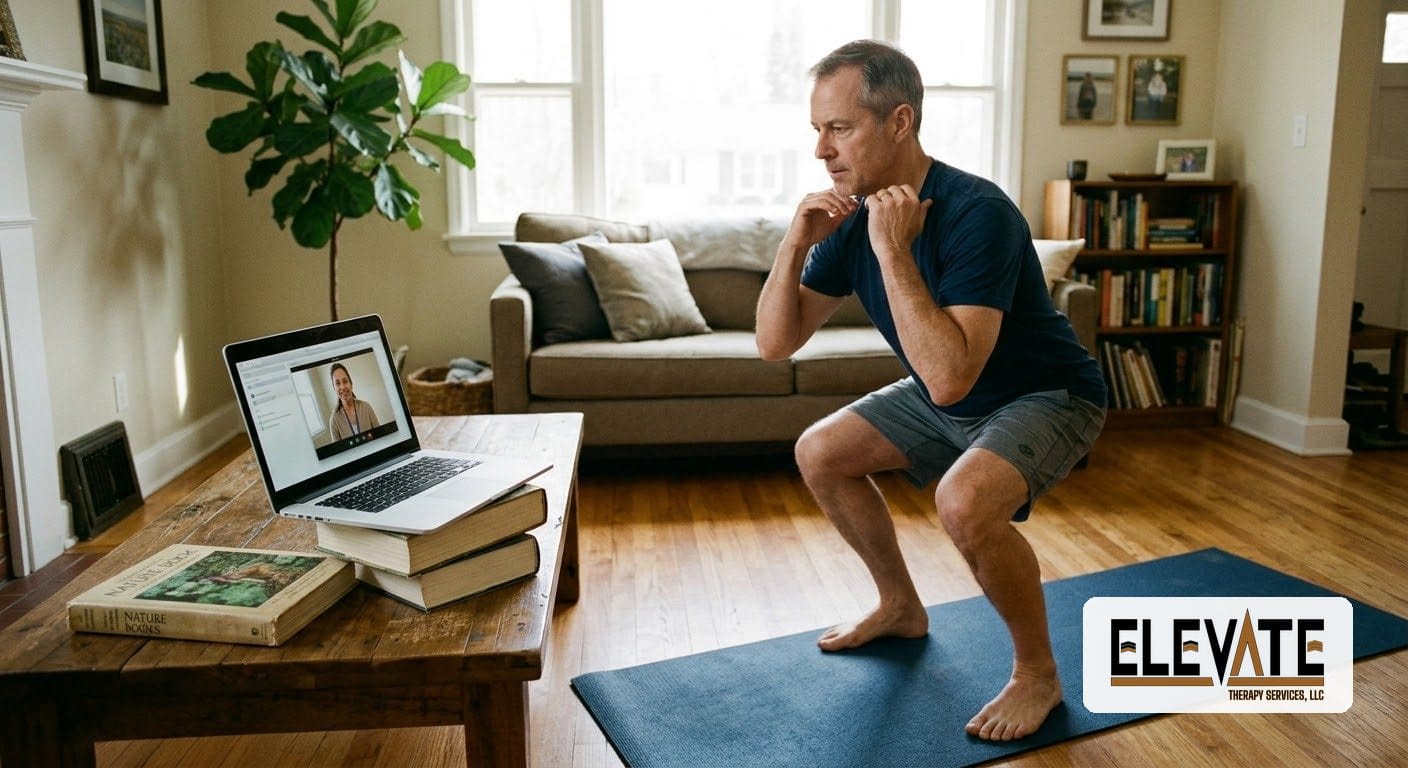
At your home, gym, or workplace, or by secure video. We take you through task-based movements and record what we need to analyze them.
Your results
You receive a written movement report, a corrective exercise plan, and our recommendation for next steps, which may be physical therapy, personal training, both, or neither.
What you receive
Written movement report
What we observed, in plain language.
Corrective exercise plan
Specific, prioritized, and built around your schedule.
Follow-up recommendation
Honest guidance on whether PT, training, or self-management fits.
Who it’s for
- Recreational and competitive athletes
- High school and college student athletes, including a preseason check before the season starts (a parent or guardian joins for athletes under 18)
- Lifters and CrossFit or gym-based trainees
- Runners and field or court sport players
- Active adults with physically demanding jobs or hobbies
- People returning to activity after time off or a prior injury (we’ll talk through whether a full PT evaluation is the better first step)
- Babies and young children learning to move, with a parent or guardian present
- Workers on the job site, from physically demanding trades to jobs on their feet all day
- Seniors getting around their home or community who want to protect balance and independence
For parents and coaches
Preseason screen for student athletes
Many sports injuries start with movement habits you can see before anything hurts, like knees caving in on landings or a hip dropping while running. A preseason screen spots those patterns early and gives your athlete a short plan to build into warm-ups.
Does a parent need to be there?
Yes. A parent or guardian joins the session for athletes under 18 and signs the consent form.
Is this a sports physical or clearance to play?
No. It’s an educational and performance screen, not a sports physical, a diagnosis or medical clearance. If we see signs of an injury, we’ll recommend a full physical therapy evaluation or a visit with their doctor.
What does my athlete get?
A written summary of what we saw and a short corrective program they can add to their warm-up.
Where does it happen?
At your home, a gym or a practice field, or by secure video.
Can you screen a whole team?
Yes. We can set up group screens for teams and clubs. Call us to talk through options.
Mobile and telehealth
We come to you in Oakland and Macomb County, or we meet by video. For video screens you’ll need a space to move, a device with a camera, and the ability to position the camera so we can view you from the side and front. Camera angle matters because we need to see true joint angles, so we’ll walk you through setup.
Telehealth is limited to clients located in Michigan.
Questions
Is this a physical therapy evaluation?
It’s a movement screen designed for prevention and performance. If we see signs that a full PT evaluation is appropriate, we’ll tell you.
Do you come to me?
Yes. We bring the screen to you: your home, gym, workplace, or facility in Oakland & Macomb County, MI.
Can this guarantee I won’t get injured?
No. No screen can. It identifies movement patterns that may increase stress on certain tissues and gives you a plan to address them.
Do I need to be injured to book?
No. It’s built for people who are currently active and want to stay that way.
What if I’m currently in pain?
Tell us on the call. We may recommend a physical therapy evaluation first.
Does insurance cover this?
ELEVATE is a cash-based practice. Inquire for pricing and we’ll go over it on your free consultation call.
Can the screen be done by video?
Yes, for clients located in Michigan. We’ll cover setup on the call.
What does the process look like?
You start with a free consultation call. If the screen is a fit, we do it at your home, gym or workplace, or by secure video, and you receive your written movement report, corrective exercise plan and follow-up recommendation. We’ll go over scheduling details with you on the call.
Talk it through with us
Curious how your body handles load? Schedule a free consultation call and we’ll talk through whether the Strong & Steady Movement Screen fits your goals. Pricing is available by inquiry.
Reading first? Why strong isn’t the same as injury-resilient. Referring someone else? See Refer a Patient.
The Strong & Steady Movement Screen is an educational and performance-oriented assessment and is not a medical diagnosis or a substitute for a physical therapy evaluation. Results do not predict or prevent injury. If you are experiencing pain, injury, or a medical emergency, contact your healthcare provider or call 911.
