Rebuild Independence with Compassionate Occupational Therapy
Occupational Therapy Across the Lifespan: A Complete Guide
Empowering meaningful daily living at every age and stage.
Occupational therapy (OT) supports people of all ages in living meaningful, independent lives. From newborns in the NICU to older adults aging in place, occupational therapists address the physical, cognitive, emotional, and environmental barriers that limit daily participation. This comprehensive guide explores the role of occupational therapy at every stage of life.

What Is Occupational Therapy?
Occupational therapy is a health profession focused on enabling people to participate in the activities — or "occupations" — that give their lives purpose and meaning. These occupations include self-care (bathing, dressing, eating), productivity (school, work), and leisure. Occupational therapists evaluate barriers to participation and develop individualized interventions to overcome them.
Unlike other rehabilitation professions, OT takes a holistic, person-centered approach — addressing not just the body, but the mind, environment, and daily routines of each individual.
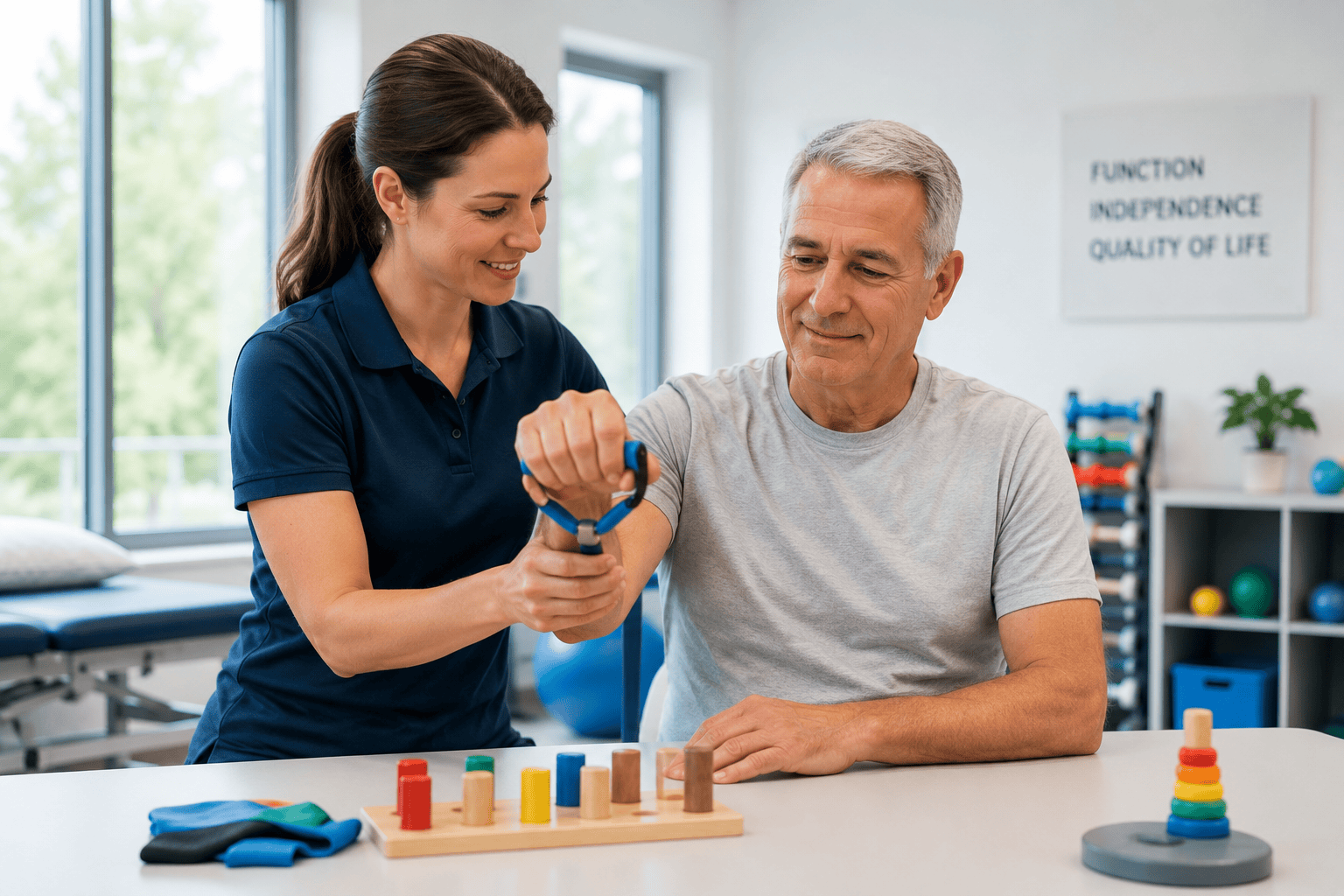
PHYSICAL THERAPY CAN BENEFIT ALL AGE GROUPS
OOT for Infants and Toddlers (Ages 0–3)
Early intervention capitalizes on the brain's neuroplasticity. OTs work with families to support developmental milestones and address feeding, sensory processing, and fine motor development.
Key Focus Areas
- Feeding and oral motor skills (breastfeeding, bottle feeding, transitioning to solids)
- Sensory processing and regulation
- Fine and gross motor development
- Play skills and parent-infant interaction
- Self-care routines
Common Conditions Treated
Prematurity, cerebral palsy, Down syndrome, autism spectrum disorder (ASD), developmental delays, and feeding disorders.
OT for School-Age Children (Ages 3–12)
School entry dramatically increases demands on independence, attention, and fine motor precision. OT plays a critical role in helping children succeed academically and socially.
Key Focus Areas
- Handwriting and pencil grip
- Sensory integration and self-regulation
- Activities of daily living (dressing, grooming, toileting)
- Attention and executive function
- Social participation and peer interaction
- Assistive technology for learning differences
Common Conditions Treated
Autism spectrum disorder, ADHD, developmental coordination disorder (DCD), learning disabilities, and sensory processing disorder.
OT for Adolescents (Ages 13–17)
OTs support adolescents in bridging the gap between childhood dependence and adult autonomy — targeting executive functioning, vocational readiness, and social skills.
Key Focus Areas
- Executive functioning (planning, time management, organization)
- Vocational readiness and job skills
- Independent living skills (cooking, budgeting, transportation)
- Mental health and emotional regulation
- Social skills and community participation
- Transition planning from school to adult services
OT for Young Adults (Ages 18–25)
OT supports young adults navigating college, careers, relationships, and independent households — including those with disabilities or new-onset conditions.
Key Focus Areas
- Independent living and home management
- Post-secondary education participation
- Work readiness and vocational rehabilitation
- Community integration
- Mental health recovery and wellness
- Rehabilitation after acquired injury (TBI, spinal cord injury, stroke)
OT for Adults (Ages 26–64)
For working-age adults, OT most commonly addresses recovery from injury or illness, chronic condition management, and workplace wellness.
Key Focus Areas
- Return-to-work programs after injury or surgery
- Chronic pain and fatigue management
- Hand therapy (fractures, carpal tunnel, tendon injuries)
- Ergonomic assessment and workplace modification
- Neurological rehabilitation (MS, Parkinson's disease, stroke)
- Mental health and burnout recovery
OT for Older Adults (Ages 65+)
OT helps seniors maintain independence, safety, and quality of life. Research shows OT interventions can delay or prevent nursing home placement.
Key Focus Areas
- Fall prevention and balance training
- Home modification and safety assessment
- Dementia and cognitive decline management
- Activities of daily living (ADLs) and instrumental ADLs (IADLs)
- Driver rehabilitation and transportation planning
- Post-hospitalization recovery (hip fracture, joint replacement, stroke)
OT in Palliative and End-of-Life Care
At end of life, OT shifts focus to quality of life, comfort, and meaningful engagement — supporting both patients and caregivers.
Key Focus Areas
- Energy conservation and activity pacing
- Adaptive equipment for comfort and dignity
- Meaningful activity engagement
- Caregiver training and education
- Legacy activities and life review
Occupational Therapy as a Lifelong Partner in Health
Occupational therapy's defining strength is its adaptability. By focusing on what matters most to each person, OT provides relevant, meaningful support at every stage of life.
Contact ELEVATE Therapy Services today to learn how our occupational therapists can support you or your loved one at any stage of life.

Schedule a Visit or Ask a Question
Our dedicated team is here to guide you with therapy solutions tailored to your unique needs, ensuring comfort, confidence, and better outcomes—right at home.
Condition guides
See every condition we treat on our Conditions We Treat page.
Contact Elevate Therapy Services
Need to reach us? Use our web form to send a message now, or contact us using one of the methods below.
We will be in contact within one to two business days.
Phone: (248) 266-5721
Fax: (586) 788-1704
