Recover Your Voice with Expert Speech-Language Therapy
Speech Language Therapy Across the Lifespan: A Complete Guide
Supporting communication and swallowing at every stage of life.
Speech-language pathology (SLP) addresses communication and swallowing disorders across every stage of life — from infants who struggle to feed to older adults recovering from stroke. This guide explores the critical role of SLP at each phase of human development.

What Is Speech-Language Pathology?
Speech-language pathology is a regulated health profession focused on the prevention, assessment, diagnosis, and treatment of communication and swallowing disorders. SLPs work across hospitals, schools, outpatient clinics, rehabilitation centers, and home health settings.
The scope of SLP practice encompasses articulation, phonology, language comprehension and expression, social communication (pragmatics), voice, fluency (stuttering), augmentative and alternative communication (AAC), and dysphagia (swallowing disorders).
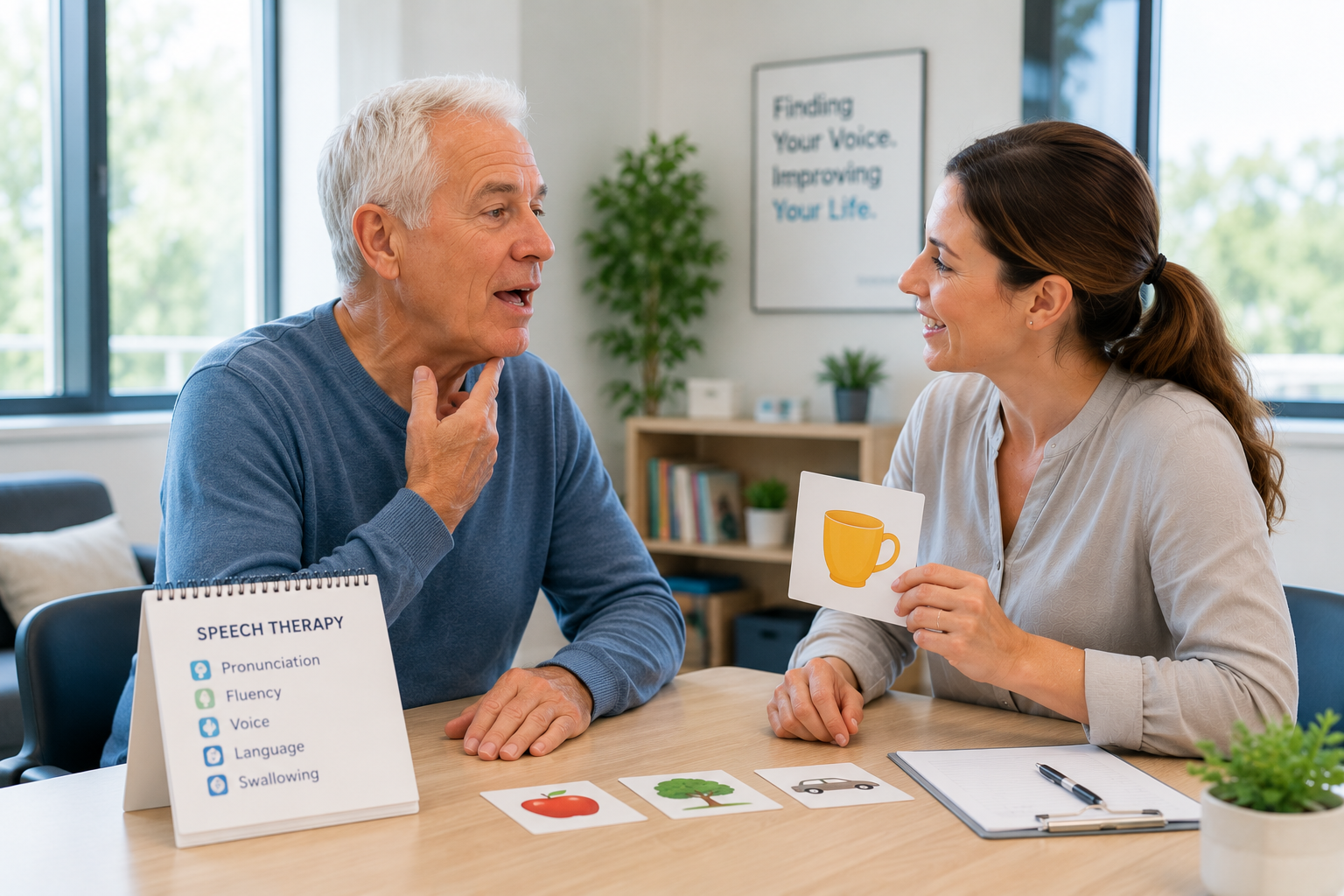
SPEECH LANGUAGE THERAPY CAN BENEFIT ALL AGE GROUPS
SLP for Infants and Toddlers (Ages 0–3)
The first three years of life are a critical window for language acquisition and feeding development. Early SLP services can dramatically improve long-term outcomes.
Key Focus Areas
- Feeding and swallowing (breast/bottle feeding, oral motor skills)
- Pre-linguistic communication (joint attention, gestures)
- First words and early vocabulary development
- Receptive and expressive language milestones
- Parent coaching and caregiver-implemented strategies
- AAC for non-verbal children
Common Conditions Treated
Autism spectrum disorder, late language emergence, cleft palate, Down syndrome, cerebral palsy, hearing loss, prematurity, and feeding disorders.
SLP for School-Age Children (Ages 3–12)
School entry dramatically increases communication demands. SLP support helps children succeed academically, socially, and in literacy.
Key Focus Areas
- Articulation and phonological disorders
- Language disorders (spoken and written)
- Reading and writing support — phonological awareness for dyslexia
- Fluency disorders (stuttering and cluttering)
- Social communication and pragmatic language skills
- Vocabulary, grammar, and narrative development
Common Conditions Treated
Autism, ADHD, developmental language disorder (DLD), dyslexia, childhood apraxia of speech (CAS), and selective mutism.
SLP for Adolescents (Ages 13–17)
SLPs support teens in developing skills for academic success, peer relationships, and future employment — addressing complex language, fluency, and social communication.
Key Focus Areas
- Higher-level language skills (inference, figurative language, academic vocabulary)
- Stuttering management and fluency strategies
- Social communication and conversation skills
- Self-advocacy for students with communication differences
- Transition planning for post-secondary education and employment
- Voice disorders (including transgender voice)
SLP for Adults (Ages 18–64)
Adult SLP most commonly addresses acquired communication and swallowing disorders resulting from neurological events, illness, or injury — as well as ongoing support for lifelong communication differences.
Key Focus Areas
- Aphasia rehabilitation (language loss after stroke)
- Dysarthria treatment (motor speech disorders)
- Apraxia of speech therapy
- Cognitive-communication disorders after TBI
- Dysphagia evaluation and treatment
- Voice disorders and head/neck cancer rehabilitation
- Fluency (stuttering) therapy
SLP for Older Adults (Ages 65+)
Dysphagia is a life-threatening concern in older adults — aspiration pneumonia from unsafe swallowing is a leading cause of hospitalization. SLP assessment and intervention can be life-saving.
Key Focus Areas
- Post-stroke aphasia and communication rehabilitation
- Dysphagia assessment and management
- Dementia and cognitive-communication support
- Voice changes associated with aging (presbyphonia)
- Parkinson's disease voice treatment (LSVT LOUD)
- Caregiver communication strategies
- AAC for individuals who lose the ability to speak
SLP in Palliative and End-of-Life Care
SLPs ensure safe swallowing, preserved communication, and dignified connection with loved ones during the final stages of life.
Key Focus Areas
- Safe swallowing and modified diet recommendations
- Comfort feeding decisions with the care team and family
- AAC and low-tech communication supports
- Caregiver and family education
SLP as a Lifelong Communication Partner
From a child's first words to an elder's final conversations, speech-language pathologists support human connection at every stage of life.
Contact ELEVATE Therapy Services today to connect with our experienced speech-language pathologists.

Schedule a Visit or Ask a Question
Our dedicated team is here to guide you with therapy solutions tailored to your unique needs, ensuring comfort, confidence, and better outcomes—right at home.
Contact Elevate Therapy Services
Need to reach us? Use our web form to send a message now, or contact us using one of the methods below.
We will be in contact within one to two business days.
Phone: (248) 266-5721
Fax: (586) 788-1704